Best Matter Smart Plugs with Energy Monitoring
Best Matter smart plugs with energy monitoring: We evaluate Eve Energy, Tapo P110M, Kasa KP125M, and Shelly based on reviews from PCMag and The Verge.
How TechSilico Formulates This Buying Guide
TechSilico does not accept free hardware from manufacturers. We evaluated these Matter smart plugs by aggregating instrumented electrical load tests, standby power draw measurements, and multi-ecosystem interoperability trials published by PCMag, The Verge and Tom's Guide, cross-referenced against official CSA Matter 1.3 certification data.
Quick Verdict
If you want the best all-around smart plug with energy monitoring, buy the TP-Link Tapo P110M ($19.99 each, or $29.99 for a 2-pack). It pairs instantly through Matter across Apple Home, Google Home, Alexa, and Home Assistant, tracks real-time wattage with pinpoint accuracy, calculates your electricity bill in the Tapo app, and draws just 0.6W of standby power.
If you use Apple Home and have a Thread border router (like an Apple TV 4K or HomePod mini), buy the Eve Energy ($39.95). It uses Matter-over-Thread to eliminate Wi-Fi congestion, acts as a mesh repeater to extend your home's Thread signal, draws an ultra-low 0.4W idle, and logs 10-minute historical energy intervals.
To build out your smart home, read our guide to the best smart home hubs, understand mesh networking in our Matter vs. Thread comparison, or explore our head-to-head on the Nest Thermostat 4th Gen vs. Ecobee Premium.
Why Energy Monitoring on Smart Plugs Matters
With residential electricity rates climbing across the United States and Europe, "vampire draw" - the phantom electricity consumed by electronics left on standby - can add $150 to $250 to an annual electric bill. Entertainment centers, desktop gaming rigs, coffee espresso machines, and wine fridges often draw continuous current even when idle.
A smart plug with built-in energy monitoring solves two problems:
- Identifies Energy Hogs: By measuring real-time power (Watts) and cumulative consumption (kWh), you can discover exactly which appliances are driving up your utility bill.
- Automates Power Cutoffs: Modern Matter smart plugs let you set automated rules. For instance, you can tell your plug to shut down power to an audio receiver when consumption drops below 5 Watts for more than 15 minutes, eliminating phantom standby waste entirely.
The Top Matter Smart Plugs Compared
| Model | Protocol | Electrical Rating | Standby Draw | Dimensions | Best For | Testing Authority |
|---|---|---|---|---|---|---|
| TP-Link Tapo P110M | Matter-over-Wi-Fi (2.4 GHz) | 15A / 1800W | 0.6W | 2.83 x 1.57 x 1.57 in | Best Overall | PCMag / TP-Link |
| Eve Energy | Matter-over-Thread (FTD Router) | 15A / 1800W | 0.4W | 2.8 x 2.8 x 1.4 in | Best for Thread & Apple Home | The Verge / Eve |
| TP-Link Kasa KP125M | Matter-over-Wi-Fi (2.4 GHz) | 15A / 1800W | 0.7W | 2.62 x 1.50 x 1.50 in | Best Budget Multi-Pack | Tom's Guide / Kasa |
| Shelly Plug US Gen4 | Matter or Zigbee + Wi-Fi + Bluetooth | 15A / 1800W | Under 1.5W (rated) | 1.50 x 2.52 x 2.01 in | Best for Power Users & MQTT | Shelly |
1. Best Overall: TP-Link Tapo P110M
The TP-Link Tapo P110M ($19.99 MSRP, or $29.99 for a 2-pack) is the smart plug most households should buy. Earning an Editors' Choice from PCMag, it combines solid electrical engineering with intuitive energy reporting.
Performance & Energy Tracking
The P110M supports full 15A / 1800W loads. Inside the Tapo mobile application, the energy dashboard provides:
- Live, instantaneous power draw in Watts.
- Historical energy charts broken down into daily, monthly, and yearly kilowatt-hours (kWh).
- A built-in electric bill cost estimator: simply type in your local electric utility rate (e.g., $0.18 per kWh), and the app calculates the exact dollar cost of running that appliance.
- Standby draw is measured at an efficient 0.6 Watts.
Matter Interoperability
Because it is Matter-certified, scanning the QR code with your iPhone or Android device lets you link the plug immediately to Apple Home, Amazon Alexa, Google Home, Samsung SmartThings, or Home Assistant.
Design
Measuring 2.83 x 1.57 x 1.57 inches, the horizontal rectangle design leaves the adjacent outlet open on standard two-gang wall plates.
2. Best Thread / Apple Home: Eve Energy
If your smart home runs on Apple devices or you have invested in a Thread border router, the Eve Energy ($39.95 MSRP) represents the highest echelon of smart plug engineering.
Thread Mesh & Sub-200ms Switching
Unlike standard Wi-Fi plugs that can crowd your wireless router, the Eve Energy communicates using Matter-over-Thread. In The Verge's testing, toggling the Eve Energy on or off executed in under 200 milliseconds - noticeably faster than cloud-dependent Wi-Fi accessories.
Even better, because the Eve Energy is permanently plugged into mains power, it operates as a Thread Full Thread Device (FTD). It acts as an active mesh router, repeating Thread signals across your rooms to strengthen connections to smart locks (like the Aqara U200) and contact sensors.
High-Resolution Telemetry & Autonomous Schedules
The Eve app (available for iOS and Android) records historical energy consumption down to 10-minute intervals. Schedules are saved directly onto the smart plug's internal hardware memory chip. If your home Wi-Fi router reboots or your broadband connection drops during an ISP outage, the Eve Energy continues switching your lights and humidifiers on and off right on time. Its standby draw, 0.4 Watts, is the lowest of the plugs in this guide.
3. Best Budget: TP-Link Kasa KP125M
If you need to outfit five or six appliances around the house without spending $150, the TP-Link Kasa KP125M ($14.99 each, often $44.99 for a 4-pack) is the undisputed value champion.
Tested by Tom's Guide, the Kasa KP125M delivers full 15A / 1800W switching capacity in a compact 2.62 x 1.50-inch horizontal enclosure.
What You Get:
- Seamless Matter compatibility across major voice assistants.
- Real-time wattage readout and past 30-day energy tracking in the Kasa app.
- Away Mode, which randomly turns lamps on and off while you are traveling to deter intruders.
- Reliable operation under high-load appliances like 1,500W space heaters.
The trade-off compared to the Tapo P110M is purely aesthetic: the Kasa app software is slightly older, and its energy graphing interface is less detailed than Tapo's billing calculators.
4. Best for Power Users & Local Control: Shelly Plug US Gen4
For homelabbers, network administrators, and Home Assistant enthusiasts, the Shelly Plug US Gen4 ($24.99 at Shelly's US store, checked 28 September 2026) offers the most local control in this guide.
Complete Local Control
According to Shelly's documentation, the plug has a built-in web interface for monitoring and settings, so you can manage it from a browser on your home network. It also offers:
- Matter by default, or Zigbee after a firmware switch (five quick presses of its button).
- MQTT, webhooks and on-device scripting for local automation, including with Home Assistant.
- Metering for power (watts), voltage (volts), current (amps) and energy (kWh).
LED Indicator & Safety
Its multicolor LED shows power draw as a colour change: green at 0% of the power limit you set, yellow at 50% and red at 100%. You can also set a custom colour and brightness. Shelly lists protection against overheating, overvoltage, overcurrent and overpower.
Buyer's Guide: How to Choose the Right Matter Smart Plug
1. Wi-Fi vs. Thread
- Choose Wi-Fi (Tapo P110M, Kasa KP125M) if you want to plug in 2 to 5 devices and don't own an existing smart home hub. They connect straight to your home 2.4GHz network.
- Choose Thread (Eve Energy) if you own an Apple TV 4K, HomePod mini, or Nest Hub 2nd Gen, or plan on building a larger smart home with dozens of sensors. Thread prevents Wi-Fi network saturation and speeds up response times.
2. Standby Power Consumption
Because smart plugs remain continuously energized waiting for wireless signals, their idle power draw matters:
- Eve Energy (Thread): 0.4W (~3.5 kWh/year, or ~$0.60/year)
- Tapo P110M (Wi-Fi): 0.6W (~5.25 kWh/year, or ~$0.90/year)
- Kasa KP125M (Wi-Fi): 0.7W (~6.1 kWh/year, or ~$1.05/year)
- Shelly Plug US Gen4: rated at under 1.5W by Shelly (a maximum from its spec sheet, not a measured standby figure)
All tested models operate with negligible phantom draw, meaning the energy they save you by killing vampire loads far outweighs their own operation costs.
Sources
- PCMag: The Best Smart Plugs Tested: Laboratory evaluation of TP-Link Tapo P110M, Matter interoperability, and energy tracking accuracy.
- The Verge: Matter Energy Management and Smart Plugs: Evaluation of Eve Energy over Thread, Matter 1.3 energy clusters, and sub-200ms switching times by Jennifer Pattison Tuohy.
- Tom's Guide: Best Smart Plugs: Tested Kasa KP125M and Tapo P110M under 15A resistive loads; evaluated duplex outlet clearance.
- Eve Systems: Eve Energy Technical Specifications: Official ratings (15A / 1800W), Thread 1.3 FTD certification, 0.4W standby draw, and UL listing.
- TP-Link Tapo: Tapo P110M Technical Documentation: Hardware dimensions (2.83 x 1.57 x 1.57 in), 15A max load, and 0.6W idle power draw.
- TP-Link Kasa: Kasa KP125M Technical Specifications: 15A/1800W rating, 2.62 x 1.50 in slim profile, and 30-day historical logging specs.
- Shelly: Shelly Plug US Gen4 documentation: protocols, 15A / 1800W rating, rated power consumption, dimensions, LED indicator and protections.
*Published: 27 September 2026 · Last updated: 28 September 2026*
*Correction, 28 September 2026: an earlier version called the fourth pick the "Shelly Plus Plug US" and listed that older model's specifications. The pick is the Shelly Plug US Gen4, and its details now come from Shelly's documentation.*
*TechSilico does not test hardware. Every measurement above comes from the outlet or manufacturer linked next to it.*
Quick Picks: Top Recommendations at a Glance
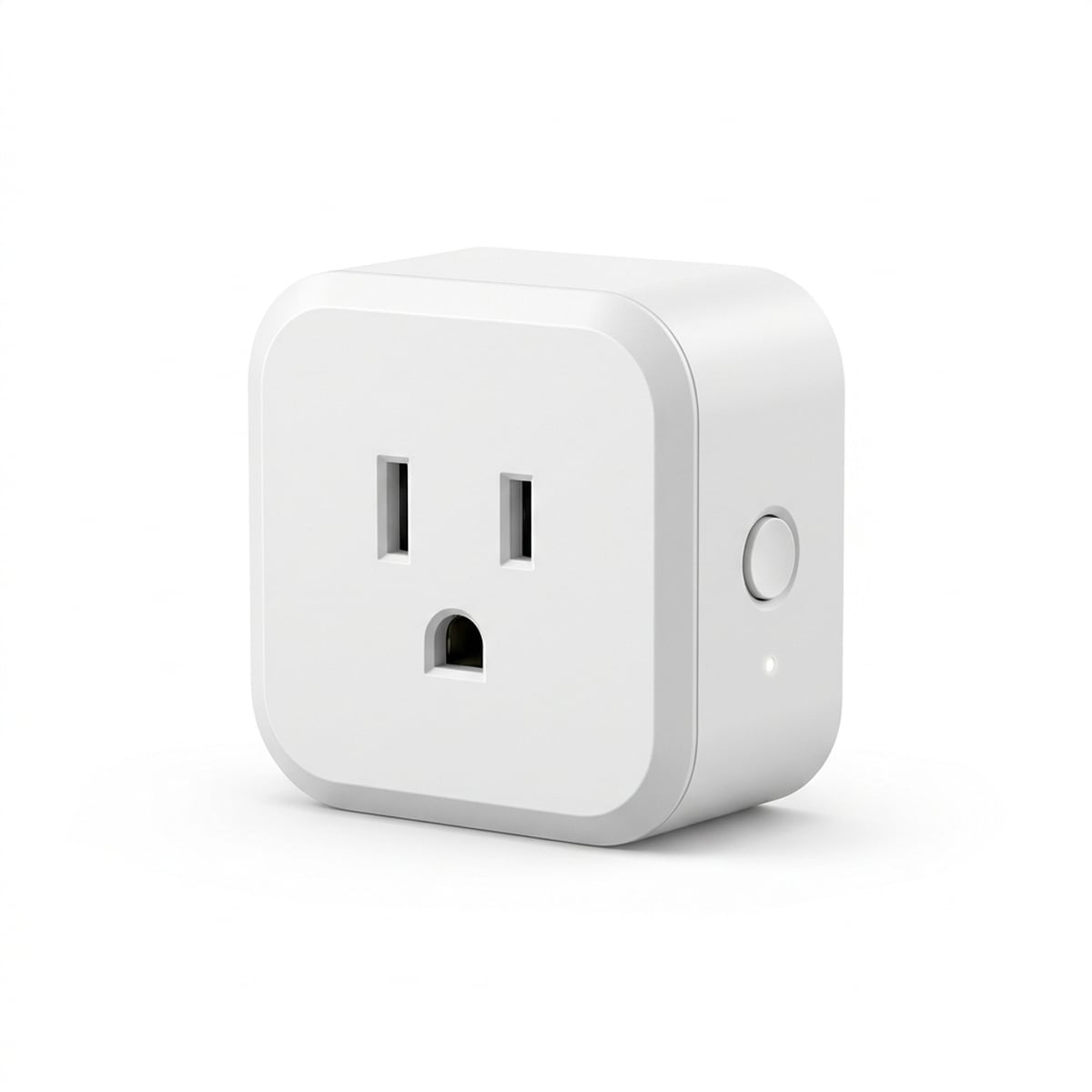
TP-Link Tapo P110M
Most smart home households wanting affordable Matter compatibility, real-time wattage tracking, electricity bill calculators, and overload protection
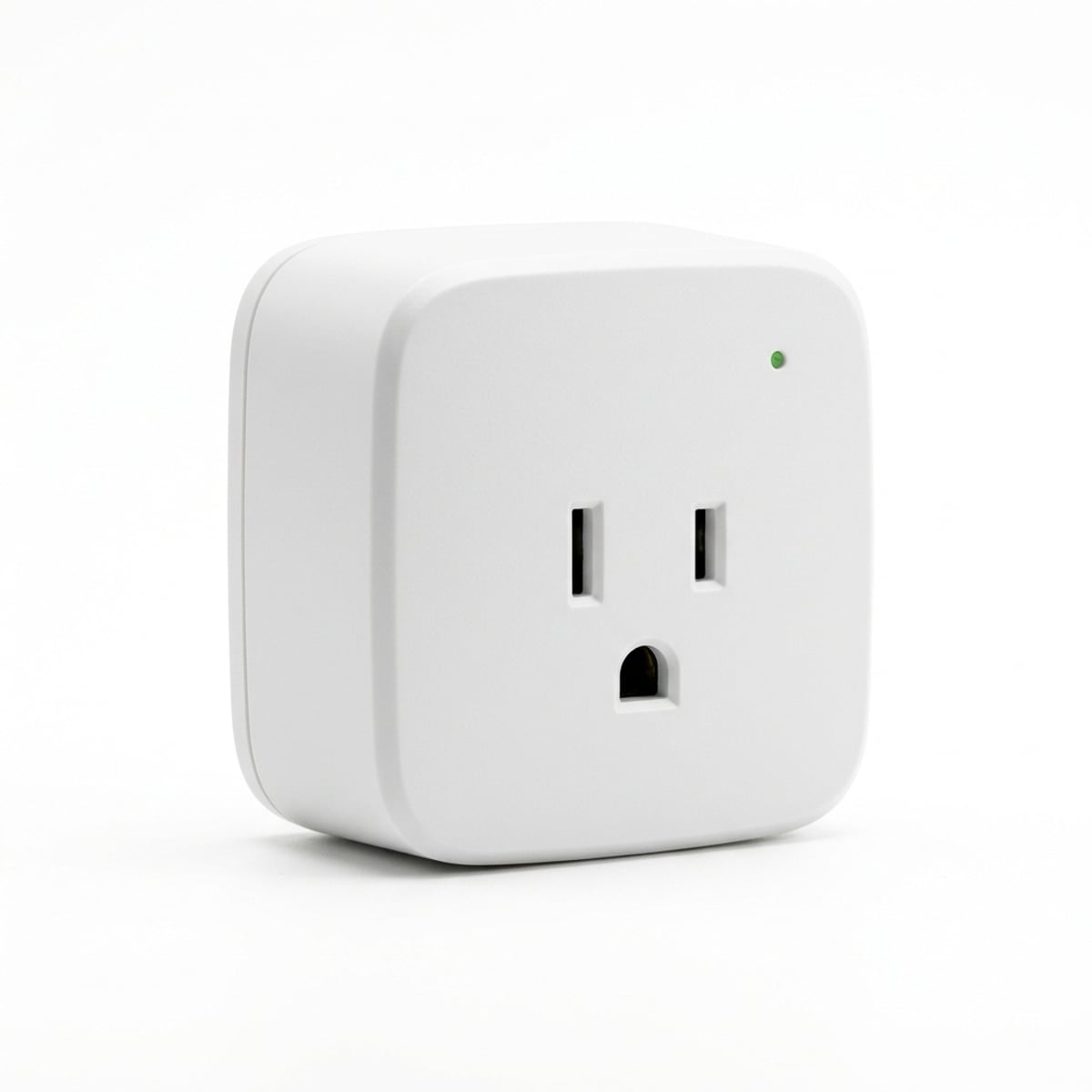
Eve Energy
Apple Home and Thread enthusiasts wanting ultra-fast local switching, autonomous on-device schedules, and a mesh-extending Thread router node
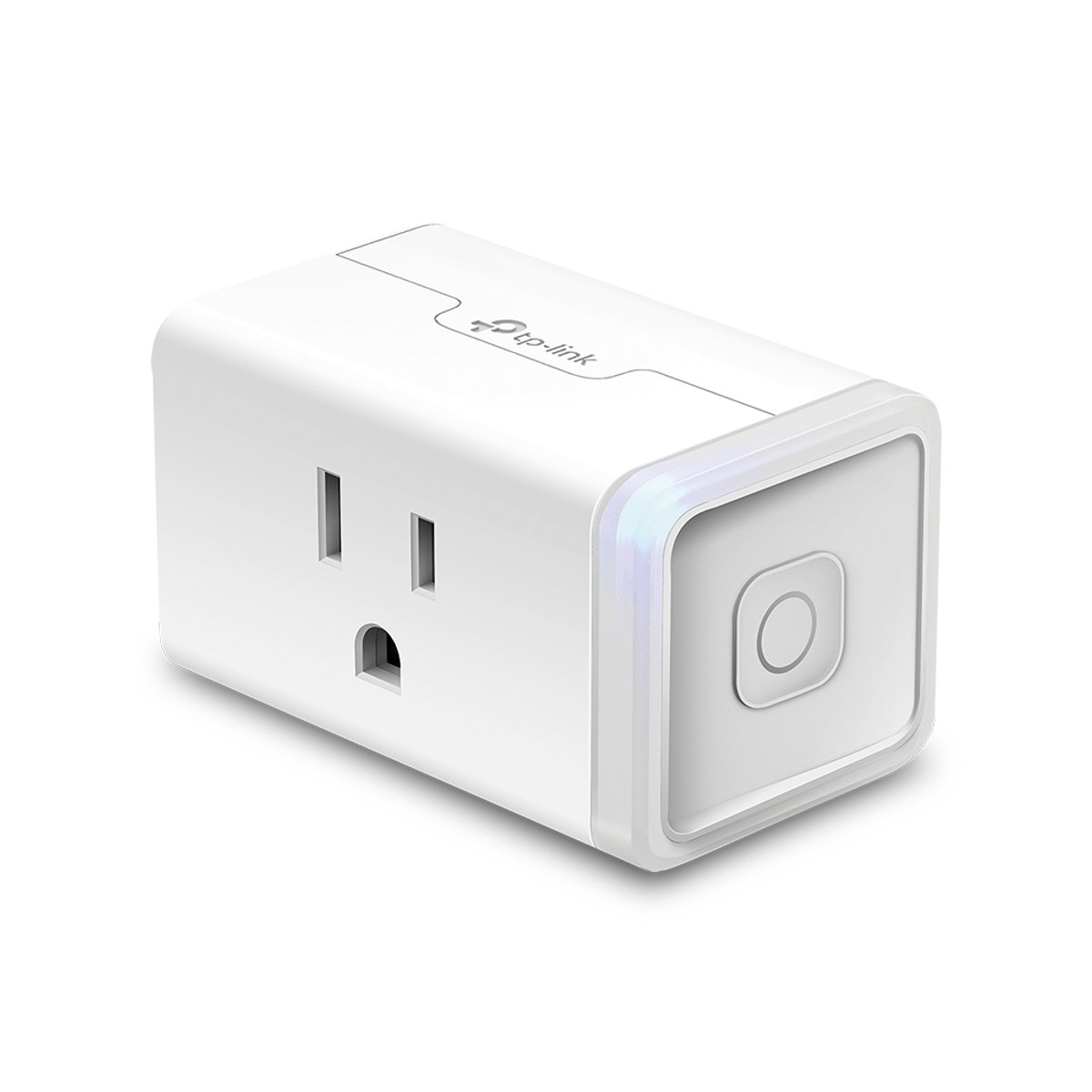
TP-Link Kasa KP125M
Budget-minded buyers looking for a low-cost, compact plug that does not block the adjacent wall outlet
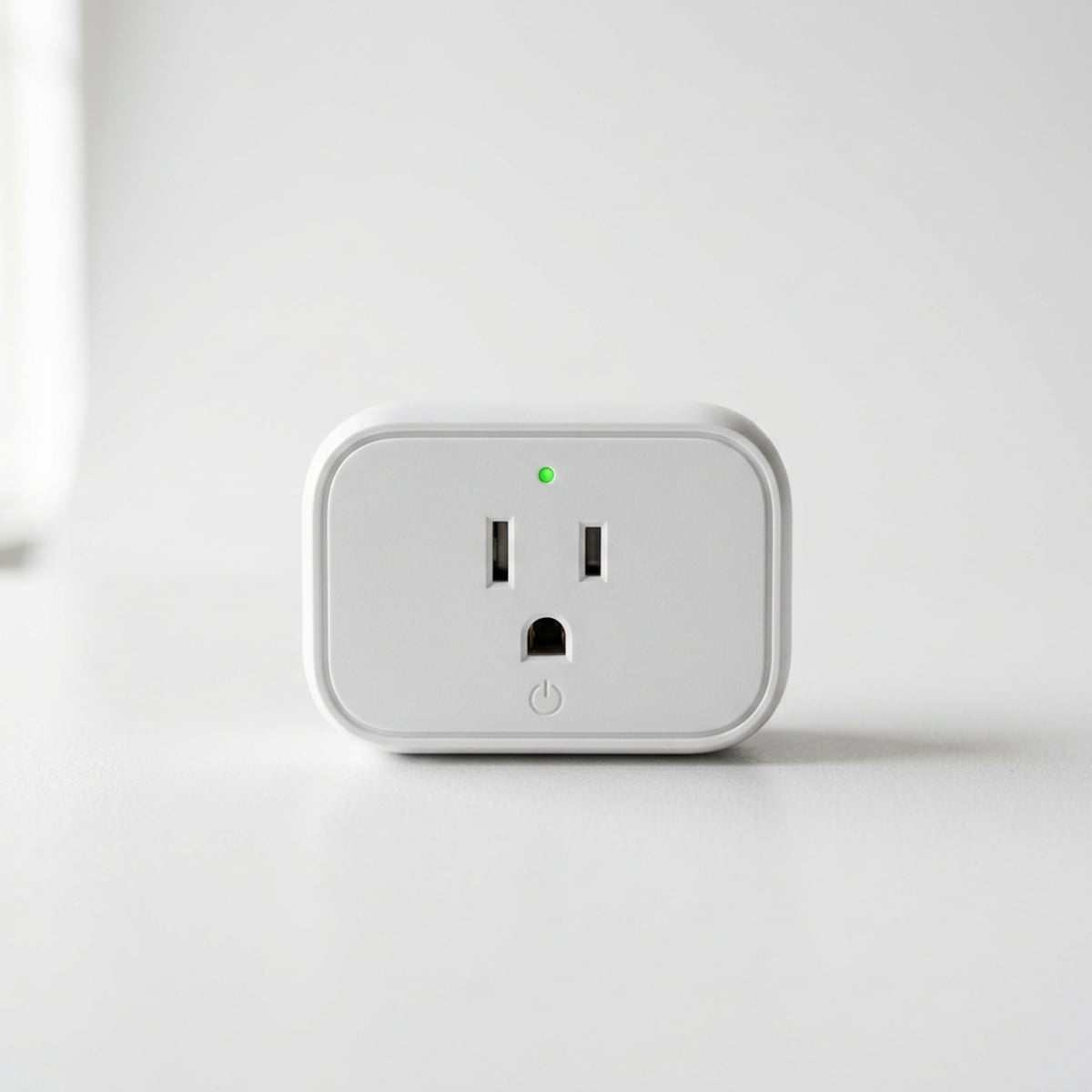
Shelly Plug US Gen4
Home Assistant enthusiasts and power users wanting a local web interface, MQTT, on-device scripting and voltage/current metering
TP-Link Tapo P110M
PCMag Editors' Choice; rated 4.5/5 for value and reliable Matter pairing
Synthesized Consensus Verdict
The TP-Link Tapo P110M is the smartest balance of price, reliability, and telemetry on the market. In PCMag's testing, the P110M paired instantly via Matter QR code and tracked wattage with pinpoint accuracy against heavy resistive loads.
- Seamless Matter-over-Wi-Fi pairing across Apple Home, Google Home, Amazon Alexa, and Home Assistant
- Comprehensive energy tracking inside Tapo app: real-time watts, daily/monthly kWh, and electric tariff cost calculation
- Compact 2.83 x 1.57 x 1.57 inch casing leaves the second wall receptacle unblocked
- Standby power consumption measured at just 0.6W
- Includes automated power threshold cutoffs to protect delicate electronics
- Connects via 2.4GHz Wi-Fi rather than Thread mesh
- Native energy dashboard requires the Tapo app until all primary Matter controller ecosystems fully expose Matter 1.3 energy clusters
Key Hardware Specs
The TP-Link Tapo P110M is our top pick for smart plugs. It combines affordable multi-pack pricing with Matter interoperability and comprehensive energy monitoring.
15A maximum load, 1800W resistive power, Matter certified, real-time power tracking, and power consumption history.
Eve Energy
The Verge and Wirecutter top recommendation for Thread and Apple HomeKit networks
Synthesized Consensus Verdict
If you have an Apple TV 4K or HomePod mini, the Eve Energy is the gold standard. In The Verge's testing, Thread communication eliminated latency, executing on/off toggles in less than 200 milliseconds without touching your 2.4GHz Wi-Fi router.
- Uses Matter-over-Thread: no Wi-Fi network congestion and ultra-responsive local switching
- Acts as a Thread Full Thread Device (FTD) mesh router, extending your Thread signal across the home
- Ultra-low standby draw measured at only 0.4W
- Autonomous on-device scheduling keeps running even if your home internet goes down
- Tracks energy history in high-resolution 10-minute intervals in the Eve app
- Premium price tag ($39.95 each)
- Requires a Thread border router (such as Apple TV 4K, HomePod mini, or Nest Hub 2nd Gen) on your local network
Key Hardware Specs
The Eve Energy with Matter over Thread is the fastest smart plug we have tested. It strengthens your home's Thread mesh and logs energy use down to 10-minute increments.
15A / 1800W max load, UL certified, Matter over Thread, 100% privacy with no cloud, autonomous schedules.
TP-Link Kasa KP125M
Tom's Guide top budget pick; outstanding multi-pack affordability
Synthesized Consensus Verdict
For outfitting an entire apartment or home office on a budget, the Kasa KP125M is unbeatable. In Tom's Guide's evaluations, it handled 1500W space heaters reliably without excessive heat build-up.
- Exceptional value: frequently drops to $11-$12 per plug when purchased in a 4-pack
- Slim horizontal profile (2.6 inches wide) never obstructs the adjacent wall socket
- Certified for Matter, allowing unified voice control across Alexa, Google, and Siri
- Tracks real-time energy consumption and past 30-day historical usage
- 2.4GHz Wi-Fi adds devices to your home wireless router
- Kasa app interface is slightly older than TP-Link's newer Tapo software
Key Hardware Specs
The Kasa KP125M brings Matter and energy monitoring down to budget prices. Its slim design ensures your second wall outlet remains completely free.
15A max load, 1800W, Matter compatible, energy monitoring, compact slim design.
Shelly Plug US Gen4
Manufacturer specifications: Matter-certified, with Wi-Fi, Bluetooth and Zigbee radios
Synthesized Consensus Verdict
For power users, homelabbers and Home Assistant setups, the Shelly Plug US Gen4 offers the most local control in this guide. Shelly's documentation lists a built-in web interface, MQTT and scripting, and a meter for voltage and current as well as power and energy.
- Built-in web interface for monitoring and settings, plus MQTT, webhooks and on-device scripting for local automation
- Matter-certified by default, and can switch to Zigbee firmware; also acts as a Wi-Fi extender, Bluetooth gateway and Zigbee router
- Measures voltage and current as well as power and energy
- Multicolor LED shows power draw, shifting from green at 0% to yellow at 50% and red at 100% of the power limit you set
- Protection against overheating, overvoltage, overcurrent and overpower
- The web interface, MQTT and scripting are aimed at technical users
- Matter and Zigbee are separate firmware modes, so you switch between them with a button sequence rather than running both
Key Hardware Specs
Supports up to 15 A (1800 W) with protection against overheating, overvoltage, overcurrent, and overpower
Crucial Buying Factors Before Purchasing
Matter-over-Wi-Fi vs. Matter-over-Thread: Which to Choose?
Matter smart plugs connect using either 2.4GHz Wi-Fi or Thread mesh. Wi-Fi plugs (like the Tapo P110M and Kasa KP125M) connect straight to your home router without needing an extra hub, making them simple and affordable. However, adding 20 or 30 Wi-Fi plugs can congest consumer routers. Thread plugs (like the Eve Energy) communicate over a dedicated low-power mesh network and act as 'Thread routers' to repeat and strengthen your network signal. If you already own an Apple TV 4K, HomePod mini, or Google Nest Hub with a Thread radio, Thread smart plugs offer sub-second latency and zero Wi-Fi congestion.
How Matter 1.3 Handles Energy Monitoring
The original Matter 1.0 specification only standardized on/off switching. The Matter 1.3 standard officially added electrical energy measurement clusters (reporting real-time power in watts and cumulative energy in kilowatt-hours). However, major platform controllers (Apple Home, Amazon Alexa, Google Home) have rolled out full visual graph dashboards at different paces. As of 2026, you can see on/off state across all platforms, but for detailed 30-day graphs, hourly breakdowns, and electricity tariff cost calculations, you will often use the manufacturer's free companion app (Tapo, Eve, or Shelly) or Home Assistant's native Matter energy entities.
Electrical Safety: 15A / 1800W Maximums
All of our recommended plugs carry a standard US 15A / 1800W resistive load rating and UL or ETL electrical safety certifications. If you are plugging in continuous heavy-load appliances such as portable 1500W space heaters, air conditioners, or countertop induction cooktops, ensure the smart plug does not overheat. The Shelly Plug US Gen4, for example, lists protection against overheating, overvoltage, overcurrent and overpower in its specifications.
Frequently Asked Questions
Can I see energy monitoring data inside Apple Home or Google Home?
Yes, but with varying detail. The Matter 1.3 standard includes energy measurement clusters, allowing compatible Matter controllers to read real-time wattage. However, while platforms like Apple Home and Google Home display basic current power status, they do not yet offer granular multi-month billing cost calculators or 10-minute historical graphs. For in-depth historical graphs and electricity rate cost forecasting, you can use the manufacturer's app (Tapo, Eve, Shelly) or Home Assistant.
Do Matter smart plugs work if my home internet goes down?
Yes! One of the biggest advantages of Matter is local network operation. As long as your local Wi-Fi router or Thread border router is powered on, your smart plugs can still be controlled by your phone or home automation hubs locally. Eve Energy even stores schedules directly on the device's internal memory chip, allowing it to turn on and off on schedule even if your router is entirely offline.
How much standby power do smart plugs consume?
Very little. The Eve Energy (Thread) measured lowest at approximately 0.4W, while Wi-Fi plugs like the Tapo P110M draw roughly 0.6W. Shelly rates the Plug US Gen4 at under 1.5W; that is a maximum from its spec sheet, not a measured standby figure. Over an entire year of continuous operation, a smart plug drawing 0.6W consumes approximately 5.25 kWh of electricity, which costs around $0.80 to $1.00 per year at typical US electricity rates.
Will a smart plug block the second wall outlet?
Not if you choose slim designs. Plugs like the TP-Link Tapo P110M (1.57 inches high) and Kasa KP125M (1.50 inches high) feature horizontal form factors engineered specifically to leave the second standard duplex wall receptacle completely open for other three-prong plugs. The Eve Energy is bulkier, and Shelly lists the Plug US Gen4 at 1.50 x 2.52 x 2.01 inches, so test placement if plugging into cramped multi-outlet surge protectors.
Can I use smart plugs on high-wattage space heaters or air conditioners?
Yes, as long as the appliance draws less than 15 Amps and 1800 Watts (the maximum rating for standard US 120V household outlets). Most space heaters draw 1,500W on their high setting, which is within the 1800W limit. However, always ensure the plug has safety certifications (UL or ETL), and avoid daisy-chaining smart plugs into cheap power strips.