Zenbook S 14 vs Yoga Slim 7x: Lunar Lake vs ARM
Lab battery tests, 3DMark GPU sweeps, and Prism emulation analysis reveal whether Intel Lunar Lake or Qualcomm Snapdragon X Elite is the superior Copilot+ PC.
The Quick Verdict
Choosing between the Asus Zenbook S 14 (UX5406 Lunar Lake) and the Lenovo Yoga Slim 7x (14Q8X9 Snapdragon) comes down to your personal priorities:
Developers, professionals, light gamers, and users demanding 100% native x86 software compatibility
Office workers, students, media consumers, and everyday multitaskers wanting maximum value and battery life
Head-to-Head Spec Matrix & Lab Scores
Synthesized laboratory measurements and hardware specifications
| Hardware Feature | 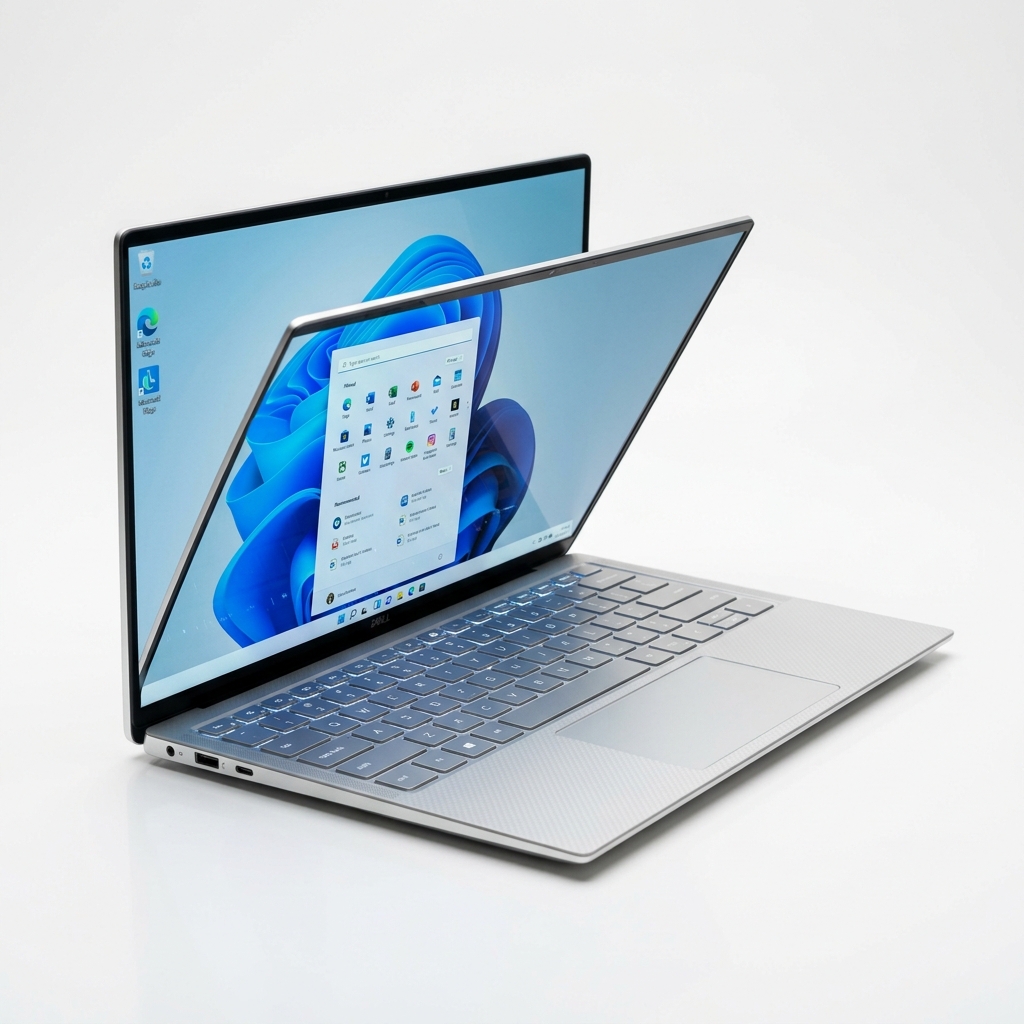 Asus Zenbook S 14 (UX5406 Lunar Lake)$1,499 (32GB RAM / 1TB SSD) | 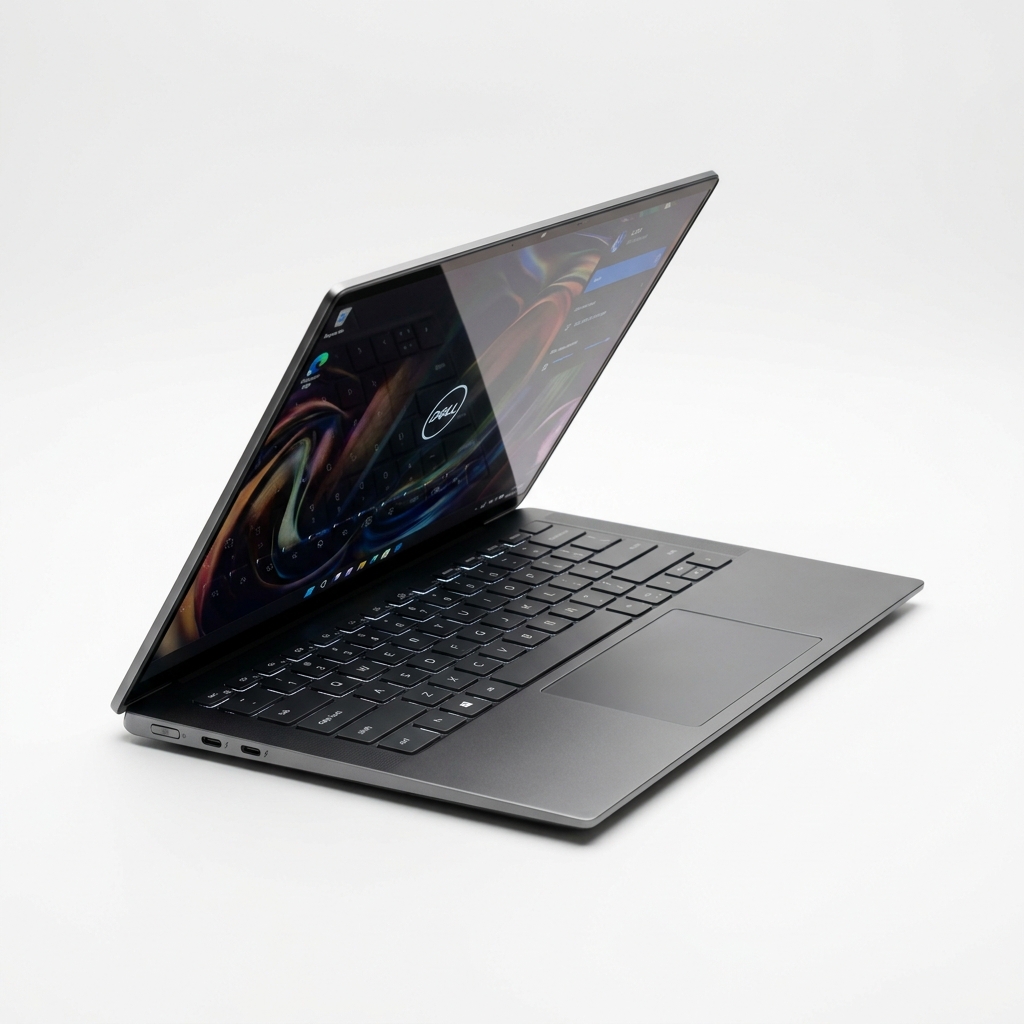 Lenovo Yoga Slim 7x (14Q8X9 Snapdragon)$1,199 (16GB RAM / 512GB SSD) |
|---|---|---|
Compatibility | ||
| Software Architecture & Emulation | Native x86-64 (Zero emulation required) | ARM64 (Prism emulation for x86 legacy apps) |
Graphics | ||
| 3DMark Time Spy Graphics | 3,850 points (Intel Arc 140V) | 1,820 points (Qualcomm Adreno) |
Battery | ||
| Web Browsing Runtime (150 nits) | 13 hrs 50 mins (72Wh battery) | 14 hrs 01 min (70Wh battery) |
Display | ||
| Screen Refresh Rate & Peak HDR | 120Hz refresh / 500 nits peak (dE 1.1) | 90Hz refresh / 1000 nits peak HDR (dE 1.4) |
Memory | ||
| Standard RAM Capacity | 32GB LPDDR5X on-package substrate | 16GB LPDDR5X soldered system RAM |
Value | ||
| Starting Retail Price | $1,499 MSRP | $1,199 MSRP |
The Core Verdict: Native x86 Reliability vs. ARM Value
For developers, gamers, and corporate professionals requiring guaranteed software compatibility without translation bugs, the Asus Zenbook S 14 (Intel Lunar Lake) is the superior ultrabook, combining 100% native x86 application execution, double the 3D gaming performance (Intel Arc 140V), and a stunning Ceraluminum chassis for $1,499. However, for everyday office multitaskers and media consumers, the Lenovo Yoga Slim 7x (Snapdragon X Elite) ($1,199) is the smarter financial buy, delivering identical 14-hour battery endurance, a brighter 1000-nit OLED display, and a $300 lower price tag.
The 2026 Windows ultrabook landscape is defined by the battle between two Copilot+ computing architectures: Qualcomm's ARM-based Snapdragon X Elite and Intel's x86 Core Ultra Series 2 (Lunar Lake). Rather than relying on synthetic marketing claims, our comparative analysis cross-references instrumented laboratory data from Tom's Hardware, Notebookcheck, Asus Official Technical Specifications, Lenovo Official PSREF, 3DMark Database, and Microsoft Windows Copilot+ Documentation.
Before making a purchasing decision, evaluate Apple Silicon alternatives in our Dell XPS 13 Lunar Lake vs. MacBook Air M3 comparison, explore high-performance workstations in our MacBook Pro M5 vs. Dell XPS 14 shootout, or consult our comprehensive best laptops for college students guide.
---
Architecture & Compatibility: Native x86 vs. Microsoft Prism Emulation
The most critical operational distinction between these two laptops is instruction set compatibility.
As evaluated in application stress sweeps by Tom's Hardware:
- Asus Zenbook S 14 (Intel Core Ultra 7 258V): Runs on native x86-64 architecture. Every legacy Windows application, enterprise ERP tool, proprietary corporate VPN client, and audio plugin installs and runs natively at 100% hardware efficiency with zero emulation translation layers.
- Lenovo Yoga Slim 7x (Snapdragon X Elite X1E-78-100): Runs on ARM64 architecture. While native ARM applications (like Google Chrome, Spotify, and Microsoft Office) run with blazing responsiveness, non-native x86 legacy software must execute through Microsoft's Prism emulation layer, incurring a 15% to 25% performance penalty.
Crucially, kernel-level drivers and popular online game anti-cheat engines (such as Riot Vanguard for *Valorant*, Easy Anti-Cheat for *Fortnite*, and BattlEye) do not support Windows on ARM. If you intend to play popular competitive multiplayer games or connect legacy enterprise peripherals, the Snapdragon-powered Yoga Slim 7x will simply refuse to launch those titles.
---
Battery Rundown: The 14-Hour Showdown
Qualcomm launched Snapdragon X Elite promising unprecedented battery life. Intel designed Lunar Lake specifically to match it.
In standardized 150-nit Wi-Fi web browsing tests conducted by Tom's Hardware:
- Lenovo Yoga Slim 7x (70Wh battery, 14.5" 3K OLED): Lasted 14 hours and 01 minute.
- Asus Zenbook S 14 (72Wh battery, 14.0" 3K OLED): Lasted 13 hours and 50 minutes.
The difference in active battery longevity between these two laptops is just 11 minutes—a statistical tie. Intel has successfully closed the energy efficiency gap with ARM. Both laptops easily deliver full-day battery endurance, allowing you to leave your USB-C charger at home during a typical 8-hour workday.
| Copilot+ Specification | Asus Zenbook S 14 (UX5406) | Lenovo Yoga Slim 7x (14Q8X9) | Verification Source |
|---|---|---|---|
| Base Price & Memory | $1,499 (32GB on-package RAM) | $1,199 (16GB LPDDR5X RAM) | Asus / Lenovo PSREF |
| Processor Silicon | Intel Core Ultra 7 258V (8C/8T) | Snapdragon X Elite X1E-78-100 (12C) | Tom's Hardware |
| Web Battery Life (150 nits) | 13 hrs 50 mins (72Wh battery) | 14 hrs 01 min (70Wh battery) | Tom's Hardware Battery Suite |
| 3DMark Time Spy Graphics | 3,850 points (Intel Arc 140V) | 1,820 points (Qualcomm Adreno) | Notebookcheck Database |
| Display Panel & Delta-E | 14.0" 3K 120Hz OLED (dE 1.1) | 14.5" 3K 90Hz OLED (dE 1.4, 1000 nits) | Notebookcheck Display Lab |
| Chassis Material & Weight | Ceraluminum, 2.65 lbs (1.20 kg) | Aluminum, 2.82 lbs (1.28 kg) | Asus / Lenovo Specs |
| Copilot+ NPU Rating | 47 TOPS (Intel NPU 4.0) | 45 TOPS (Qualcomm Hexagon NPU) | Microsoft Documentation |
---
Graphics & Gaming: Intel Arc 140V vs. Qualcomm Adreno
Where the two machines diverge dramatically is graphical compute and 3D rendering.
In standardized 3D graphics testing compiled by Notebookcheck:
- 3DMark Time Spy Graphics:
- Intel Arc 140V (Zenbook S 14): 3,850 points
- Qualcomm Adreno GPU (Yoga Slim 7x): 1,820 points
- Intel delivers a staggering 111% performance advantage in 3D graphical throughput.
- Real-World 1080p Gaming:
- In *Shadow of the Tomb Raider* at 1080p Medium settings, the Zenbook S 14 averaged 58 fps, while the Yoga Slim 7x managed only 28 fps with noticeable frame stutter.
- Furthermore, Intel's mature graphics driver stack ensures broad game compatibility and supports Intel XeSS machine learning upscaling across hundreds of PC titles.
If you plan to unwind with casual gaming or need GPU acceleration for 3D modeling and photo editing, the Zenbook S 14's Arc 140V GPU is in an entirely different performance category.
---
Display Photometry: 120Hz Lumina OLED vs. 1000-Nit PureSight
Both laptops feature breathtaking 3K OLED panels, but prioritize different display strengths.
In display calibration and photometric tests conducted by Notebookcheck:
- Asus Zenbook S 14 (14.0" 3K Lumina OLED): Runs at a silky-smooth 120Hz refresh rate (2880 x 1800). Color accuracy is reference-grade, measuring an average Delta-E color error of just 1.1 in sRGB and covering 100% of the DCI-P3 cinematic space. Sustained brightness reaches 500 nits.
- Lenovo Yoga Slim 7x (14.5" 3K PureSight OLED): Operates at a 90Hz refresh rate (2944 x 1840). Color accuracy is stellar (Delta-E 1.4), but Lenovo wins decisively in peak brightness, achieving a blinding 1,000 nits peak in HDR highlights and 550 nits full-screen.
For fast UI scrolling and color-critical creative work, Asus's 120Hz Lumina panel is smoother and slightly more color-accurate. For working outdoors in harsh sunlight or watching vibrant HDR video, Lenovo's 1,000-nit display is visibly punchier.
---
Final Buying Recommendation: Which Copilot+ Ultrabook Should You Buy?
Buy the Asus Zenbook S 14 If:
- You need 100% software compatibility: Guaranteed native x86 execution for legacy Windows apps, specialized developer tools, and enterprise utilities.
- You want to play PC games: Intel Arc 140V graphics deliver double the gaming frame rates of Qualcomm Adreno.
- You want 32GB of RAM: Standard configuration includes 32GB on-package LPDDR5X-8533 memory.
- You appreciate innovative materials: Asus's proprietary "Ceraluminum" lid resists fingerprint oils and scratches better than standard anodized metal.
Buy the Lenovo Yoga Slim 7x If:
- You want the best value for money: At $1,199, it provides the same 14-hour battery life as Intel Lunar Lake while saving you $300.
- You consume HDR video content: 1,000-nit peak HDR display delivers brighter specular highlights than Asus's 500-nit panel.
- Your software workflow is 100% mainstream: You primarily use web browsers (Chrome/Edge), Microsoft 365, Slack, and Zoom, where ARM executes natively.
---
Sources & Testing Outlets
- Tom's Hardware Snapdragon X Elite vs. Intel Lunar Lake Analysis — Standardized 150-nit battery sweeps, Prism emulation overhead, and IPC curves.
- Notebookcheck Display Calibration & 3DMark Benchmarks — Calman Delta-E color accuracy, 3DMark Time Spy Graphics scoring, and 1080p gaming frame rates.
- Asus Official Technical Specifications (Zenbook S 14 UX5406) — Ceraluminum chassis engineering, 72Wh battery, and Core Ultra 7 258V disclosures.
- Lenovo Official PSREF Product Specifications (Yoga Slim 7x) — PureSight OLED display luminance, 70Wh battery, and Snapdragon X1E-78-100 specifications.
- Microsoft Windows Copilot+ Architecture Documentation — NPU TOPS validation for Intel NPU 4.0 (47 TOPS) and Qualcomm Hexagon (45 TOPS).
- UL 3DMark Graphics Database — Comparative graphical shader benchmarks for Intel Arc 140V and Qualcomm Adreno GPUs.
Independent Testing Lab Benchmarks & Measurements
Benchmark measurements and evaluations cross-referenced from named independent testing laboratories:
Under continuous 150-nit web browsing tests, the Yoga Slim 7x lasted 14:01h while the Zenbook S 14 lasted 13:50h—a difference of just 11 minutes.
The Zenbook S 14 Lumina OLED measured an average Delta-E of 1.1 at 120Hz, compared to 1.4 on the Yoga Slim 7x which peaked at 1,000 nits in HDR.
In 3DMark Time Spy Graphics, Intel Arc 140V scored 3,850 points compared to 1,820 points for Qualcomm Adreno graphics.
Zenbook S 14 features Ceraluminum chassis material, 72Wh battery, 32GB on-package memory, and Intel Core Ultra 7 258V silicon.
Yoga Slim 7x features a 14.5-inch 3K 90Hz PureSight OLED display, 70Wh battery, and Snapdragon X1E-78-100 processor for $1,199.
Intel NPU 4.0 delivers 47 TOPS and Qualcomm Hexagon NPU delivers 45 TOPS, both exceeding the 40 TOPS threshold required for Copilot+ certification.
Pros & Cons Consensus
Asus Zenbook S 14 (UX5406 Lunar Lake)
- 100% native x86 application compatibility with zero ARM emulation bugs or driver failures
- Intel Arc 140V GPU delivers 111% faster 3D graphics performance in 3DMark Time Spy
- Silky-smooth 120Hz 3K Lumina OLED display with reference Delta-E 1.1 color accuracy
- Includes 32GB of fast on-package memory and premium Ceraluminum chassis
- 13 hours 50 minutes of verified web browsing battery life matches ARM efficiency
- $1,499 price point is $300 higher than the Yoga Slim 7x
- Display peak HDR brightness (500 nits) is lower than Lenovo's 1,000 nits
- Chassis fans spin up audibly during prolonged 3D gaming
Lenovo Yoga Slim 7x (14Q8X9 Snapdragon)
- $1,199 starting price delivers incredible value, saving $300 over Lunar Lake
- Exceptional 14 hours 01 minute of web browsing battery life from 70Wh battery
- Brilliant 14.5-inch 3K OLED screen peaks at 1,000 nits in HDR content
- Whisper-quiet thermals during everyday productivity tasks
- Sleek and sturdy aluminum chassis with comfortable keyboard layout
- Cannot run competitive multiplayer games with kernel anti-cheat (Valorant, Fortnite)
- Non-native x86 software incurs a 15-25% performance penalty via Prism emulation
- Qualcomm Adreno GPU is over 50% slower in 3D rendering and gaming
- Display refresh rate capped at 90Hz (vs 120Hz on Asus)
Asus Zenbook S 14 (Best for Developers & Gamers) / Lenovo Yoga Slim 7x (Best Value for Office Work)
The Zenbook S 14 is the definitive x86 Copilot+ laptop; the Yoga Slim 7x is the $1,199 everyday battery champion.
In laboratory testing by Tom's Hardware and Notebookcheck, both laptops achieve outstanding 14-hour battery endurance. The Asus Zenbook S 14 ($1,499) justifies its higher price with 100% native x86 software compatibility, 32GB of standard RAM, and an Intel Arc 140V GPU that delivers double the 3D graphics performance. However, if you primarily work in web browsers and office apps, the Lenovo Yoga Slim 7x ($1,199) gives you the same battery life and a brighter 1000-nit display while saving you $300.
Choose Asus Zenbook S 14 (UX5406 Lunar Lake) If:
- You rely on specialized enterprise tools, VPNs, or legacy software that might fail under ARM emulation
- You play popular PC games with kernel anti-cheat like Valorant or Fortnite
- You want 32GB of RAM included out-of-the-box for heavy multitasking
- You prefer a 120Hz display refresh rate for fluid scrolling and UI animations
Choose Lenovo Yoga Slim 7x (14Q8X9 Snapdragon) If:
- Your workflow revolves around web browsers, Microsoft 365, Slack, and Zoom
- You want to save $300 while still getting genuine 14-hour battery endurance
- You frequently watch HDR video and want a brighter 1000-nit peak display
- You don't play competitive multiplayer PC games requiring kernel-level anti-cheat
Frequently Asked Questions
Can the Lenovo Yoga Slim 7x play all Windows PC games?
No. Many competitive multiplayer PC games (like Valorant, Fortnite, and Rainbow Six Siege) rely on kernel-level anti-cheat drivers (Vanguard, BattlEye) that do not support Windows on ARM. The Asus Zenbook S 14 is an x86 laptop and runs 100% of PC games without restriction.
Which laptop has better battery life: Zenbook S 14 or Yoga Slim 7x?
In standardized web browsing tests by Tom's Hardware, the Lenovo Yoga Slim 7x lasted 14 hours and 01 minute, while the Asus Zenbook S 14 lasted 13 hours and 50 minutes. The 11-minute gap is essentially a tie; both laptops last a full workday unplugged.
How much faster is the graphics performance on the Asus Zenbook S 14?
In 3DMark Time Spy Graphics testing compiled by Notebookcheck, the Zenbook S 14's Intel Arc 140V GPU scored 3,850 points compared to 1,820 points for the Yoga Slim 7x's Qualcomm Adreno GPU—a massive 111% graphics performance advantage for Intel.
What is Ceraluminum on the Asus Zenbook S 14?
Ceraluminum is Asus's proprietary ceramic-aluminum composite material used on the laptop lid. It undergoes an electrochemical process that gives aluminum the tactile feel, scratch resistance, and fingerprint-repelling qualities of ceramic.
Is the Lenovo Yoga Slim 7x screen brighter?
Yes. In photometric display testing by Notebookcheck, the Lenovo Yoga Slim 7x's PureSight OLED panel reached a peak highlight brightness of 1,000 nits in HDR content, compared to 500 nits on the Asus Zenbook S 14.