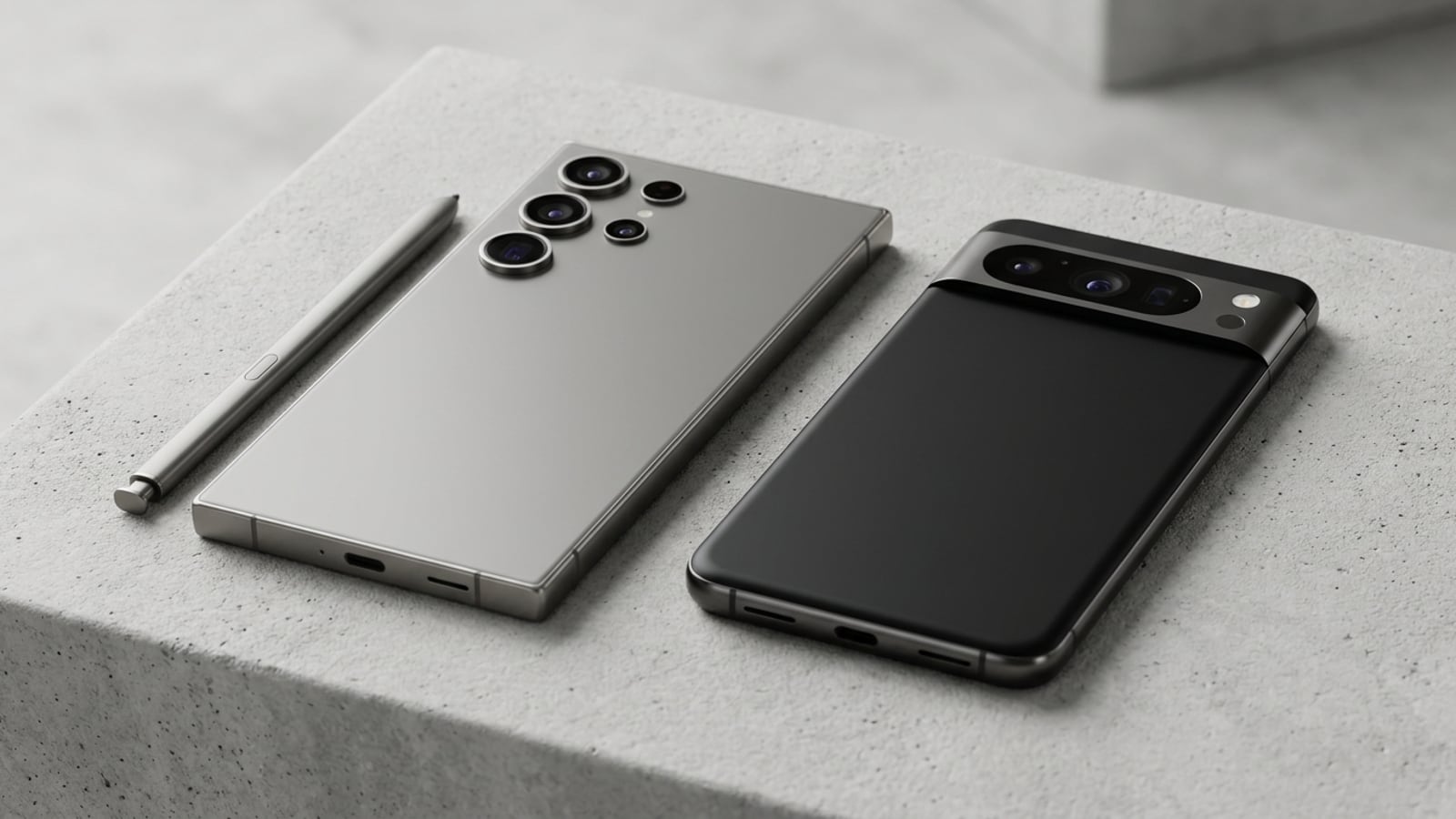
Galaxy S24 Ultra vs. Pixel 9 Pro XL: Which to Buy?
Galaxy S24 Ultra vs Pixel 9 Pro XL on display brightness, battery life, cameras and performance, compared using lab results from GSMArena and Tom's Guide.
The Quick Verdict
Choosing between the Samsung Galaxy S24 Ultra and the Google Pixel 9 Pro XL comes down to your personal priorities:
Power users wanting unmatched productivity, Snapdragon 8 Gen 3 speed, integrated S Pen stylus, and superior outdoor anti-glare optics
Mobile photographers who prioritize natural skin tones, industry-leading screen brightness under harsh sunlight, and clean Google AI integration
Head-to-Head Spec Matrix & Lab Scores
Specifications and published measurements, credited below
| Hardware Feature | 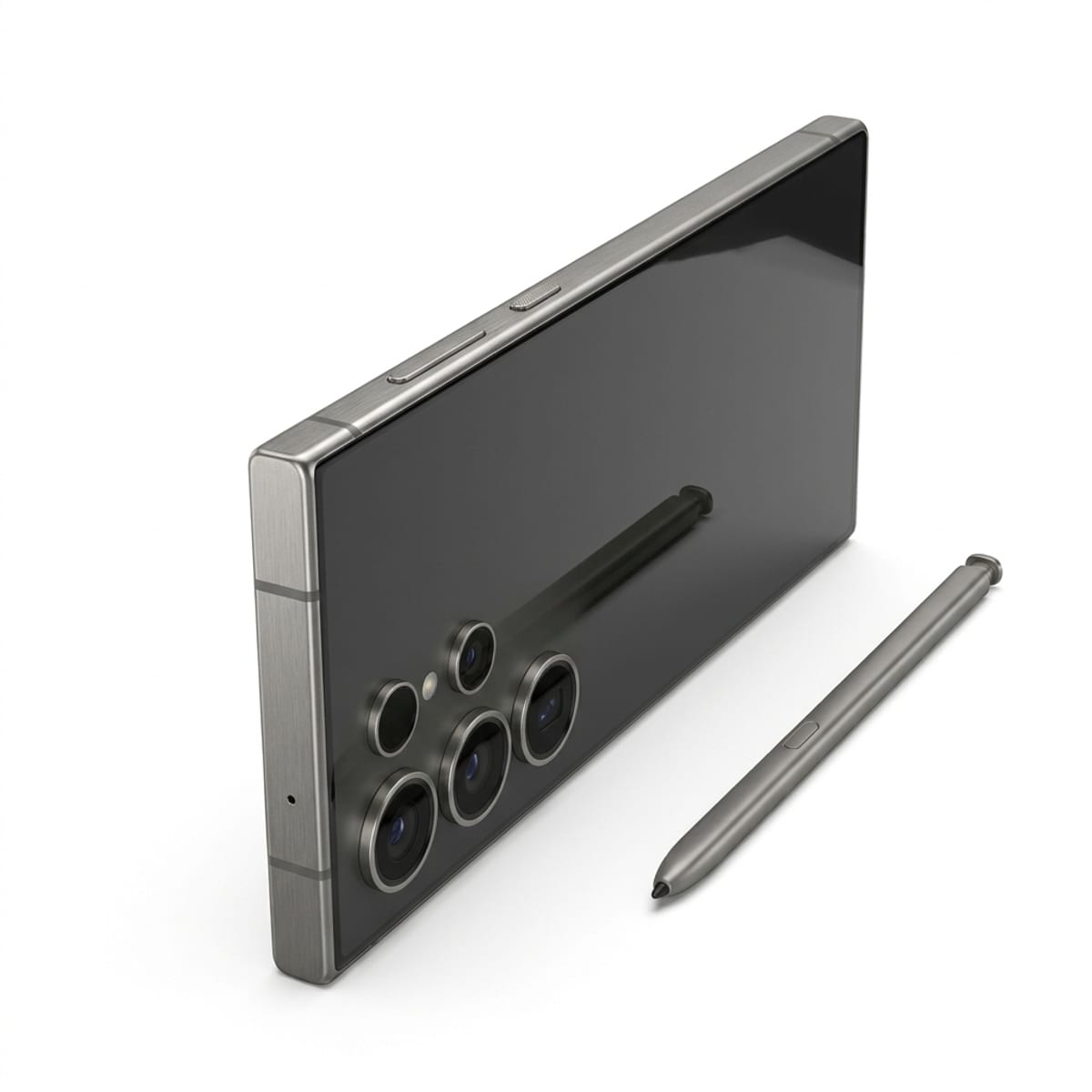 Samsung Galaxy S24 Ultra$1,299.99 launch MSRP (street price ~$950 - $1,050) |  Google Pixel 9 Pro XL$1,099.00 MSRP (128GB) |
|---|---|---|
Price & Base Storage | ||
| Base configuration MSRP | $1,299.99 (256GB / 12GB RAM) | $1,099.00 (128GB / 16GB RAM) |
Display & Glass | ||
| Screen dimensions & panel | 6.8" Dynamic AMOLED 2X, 3120x1440 (505 ppi), 1-120Hz LTPO | 6.8" Super Actua LTPO OLED, 2992x1344 (486 ppi), 1-120Hz |
| Measured max auto brightness | 1,447 nits (GSMArena, 75% white pattern) | 2,365 nits (GSMArena, 75% white pattern) |
| Glass anti-reflection | Corning Gorilla Armor (up to 75% reflection reduction) | Corning Gorilla Glass Victus 2 (standard reflection) |
Performance | ||
| Processor SoC | Qualcomm Snapdragon 8 Gen 3 for Galaxy (4nm) | Google Tensor G4 (4nm) |
Battery & Charging | ||
| Battery capacity & endurance test | 5,000 mAh; 13:49h GSMArena Active Use Score | 5,060 mAh; 12:31h GSMArena Active Use Score |
| Wired charging rate | 45W wired (69% in 30 min in GSMArena test) | 37W wired (70% in 30 min claimed with 45W brick) |
CamerasWinner: Tie | ||
| Primary wide rear camera | 200MP, f/1.7, 1/1.3", 24mm, OIS | 50MP, f/1.68, 1/1.31", 25mm, OIS |
| Dedicated optical telephotos | 10MP 3x optical (f/2.4) + 50MP 5x periscope (f/3.4) | 48MP 5x periscope telephoto (f/2.8) |
Quick Verdict
The Samsung Galaxy S24 Ultra ($1,299.99 launch, current street price around $950 to $1,050) is the better high-end power tool. It features Qualcomm's faster Snapdragon 8 Gen 3 chip, lasted 13 hours and 49 minutes in GSMArena's battery test, includes an integrated S Pen stylus, and uses glare-reducing Corning Gorilla Armor glass.
The Google Pixel 9 Pro XL ($1,099.00 base MSRP) is the better pure smartphone for photography and outdoor readability. It measured a class-leading 2,365 nits of maximum auto brightness in GSMArena's lab tests, features a more comfortable rounded design, and captures more consistent skin tones.
If you are looking at other high-end flagships, read our comparison of the iPhone 18 Pro vs. iPhone 16 Pro or check out our complete best smartphones buying guide.
1. Price and Current Street Value
When both devices launched, Google maintained a pricing advantage. The Pixel 9 Pro XL retails starting at $1,099.00 for 128GB of storage with 16GB of RAM. Upgrading to 256GB brings the price to $1,199.00 on the Google Store.
Samsung debuted the Galaxy S24 Ultra at $1,299.99 for 256GB of storage with 12GB of RAM on Samsung's store. However, because the S24 Ultra released earlier in the calendar year, current retailer street prices at Amazon and Best Buy frequently discount the phone to $950 to $1,050. At current street pricing, the S24 Ultra often costs less than a 256GB Pixel 9 Pro XL, dramatically shifting the value calculation.
2. Display and Glare Resistance
Both phones pack top-tier 6.8-inch OLED displays, but they approach outdoor usability with contrasting engineering solutions.
| Display Specification | Samsung Galaxy S24 Ultra | Google Pixel 9 Pro XL | Source |
|---|---|---|---|
| Panel Type | 6.8" Dynamic AMOLED 2X, 1-120Hz LTPO | 6.8" Super Actua LTPO OLED, 1-120Hz | Manufacturer spec sheets |
| Resolution | 3120 x 1440 pixels (505 ppi) | 2992 x 1344 pixels (486 ppi) | Samsung / Google |
| Measured Max Brightness (75% White) | 1,447 nits | 2,365 nits | GSMArena S24 Ultra / GSMArena Pixel 9 Pro XL |
| Small Window Peak (HDR) | 2,572 nits | 3,000+ nits | Tom's Guide Display Testing |
| Surface Glass | Corning Gorilla Armor | Corning Gorilla Glass Victus 2 | Corning / Manufacturers |
| Reflection Reduction | Up to 75% reflection reduction | Standard reflection profile | Corning Gorilla Armor announcement |
In raw optical emission, Google's Super Actua panel is dominant. In GSMArena's instrumented display evaluation, the Pixel 9 Pro XL sustained 2,365 nits across a standard 75% white pattern under artificial sunlight simulation, while the Galaxy S24 Ultra registered 1,447 nits.
However, numbers alone do not tell the whole outdoor story. As The Verge noted in its review, Samsung's use of Corning Gorilla Armor cuts reflection by up to 75%. Instead of trying to overpower direct reflections with sheer nit volume, the S24 Ultra stops light from bouncing into your eyes. Under bright midday sun, the two phones exhibit remarkably similar text legibility. In dim indoor lighting, the Galaxy S24 Ultra shows noticeably deeper blacks because overhead lights do not cast white hazy reflections on the screen.
3. Compute Performance and Sustained Gaming
Under the hood, these devices target very different priorities. Samsung equips the Galaxy S24 Ultra with Qualcomm's custom Snapdragon 8 Gen 3 for Galaxy, while Google uses its in-house Tensor G4 coupled with 16GB of unified RAM.
| Benchmark Metric | Samsung Galaxy S24 Ultra | Google Pixel 9 Pro XL | Test Authority |
|---|---|---|---|
| Geekbench 6 (Single-Core) | ~2,300 | ~1,950 | Tom's Guide Lab Benchmarks |
| Geekbench 6 (Multi-Core) | ~7,100 | ~4,650 | Tom's Guide Lab Benchmarks |
| 3DMark Wild Life Extreme | ~4,950 (29.6 fps) | ~2,600 (15.6 fps) | Tom's Guide / GSMArena |
| GPU Architecture | Adreno 750 (Hardware Ray Tracing) | Mali-G715 MC7 | Manufacturer spec sheets |
| Base Memory (RAM) | 12GB LPDDR5X | 16GB LPDDR5X | Manufacturer spec sheets |
In everyday tasks - scrolling social feeds, switching between messaging apps, or opening camera sessions - both phones operate without noticeable friction. The Tensor G4 includes redesigned Cortex-X4, A720, and A520 CPU clusters that run significantly cooler than the older Pixel 8 Pro.
However, in demanding workloads, the gap is massive. The Snapdragon 8 Gen 3 leads by over 50% in Geekbench 6 multi-core and nearly 90% in 3DMark graphic benchmarks. If you play demanding 3D games like *Genshin Impact*, *Honkai: Star Rail*, or *Call of Duty: Warzone*, the Galaxy S24 Ultra sustains 60 fps effortlessly, whereas the Pixel 9 Pro XL exhibits frame drops after 15 to 20 minutes of sustained thermal load.
4. Battery Runtime and Charging Speed
Battery endurance is one of the most critical factors for large-screen flagships. Both devices house ~5,000 mAh cells, but their processor efficiencies produce diverging results.
| Battery & Charging Metric | Samsung Galaxy S24 Ultra | Google Pixel 9 Pro XL | Source |
|---|---|---|---|
| Battery Capacity | 5,000 mAh | 5,060 mAh | Manufacturer spec sheets |
| GSMArena Active Use Score | 13:49h | 12:31h | GSMArena Galaxy S24 Ultra / GSMArena Pixel 9 Pro XL |
| Web Browsing Runtime | 11:06h | 12:18h | GSMArena standardized test |
| Video Streaming Runtime | 13:53h | 14:35h | GSMArena standardized test |
| Gaming Runtime | 9:36h | 7:38h | GSMArena standardized test |
| Max Wired Charging Rate | 45W PPS | 37W PPS | Manufacturer specs |
| 30-Minute Charge Result | 69% | 70% (claimed with 45W brick) | GSMArena lab testing |
In GSMArena's standardized Active Use test suite, the Galaxy S24 Ultra scored 13 hours and 49 minutes, outlasting the Pixel 9 Pro XL's 12 hours and 31 minutes by 1 hour and 18 minutes.
Looking closer at the sub-scores reveals where each phone excels:
- The Pixel 9 Pro XL edged out Samsung in continuous Wi-Fi web browsing (12:18h vs. 11:06h) and video streaming playback (14:35h vs. 13:53h).
- The Galaxy S24 Ultra crushed the Pixel in 3D gaming battery life (9:36h vs. 7:38h), highlighting Qualcomm's power-efficient GPU clocks.
On the charging bench, both phones perform similarly when paired with USB Power Delivery PPS chargers. In GSMArena's test, the Galaxy S24 Ultra reached 69% in 30 minutes over 45W, while Google claims the Pixel 9 Pro XL reaches 70% in 30 minutes when using Google's official 45W USB-C charger.
5. Camera System and Image Quality
Both flagships rank among the best camera phones on earth, but they cater to different shooting philosophies.
| Camera Hardware | Samsung Galaxy S24 Ultra | Google Pixel 9 Pro XL |
|---|---|---|
| Main Sensor | 200MP, f/1.7, 24mm, 1/1.3", multi-directional PDAF, OIS | 50MP, f/1.68, 25mm, 1/1.31", dual pixel PDAF, OIS |
| Ultrawide Sensor | 12MP, f/2.2, 13mm, 120° FoV, dual pixel PDAF | 48MP, f/1.7, 12mm, 123° FoV, dual pixel PDAF |
| Telephoto 1 | 10MP, f/2.4, 67mm (3x optical), OIS | None (uses 2x sensor crop on main 50MP) |
| Telephoto 2 (Periscope) | 50MP, f/3.4, 111mm (5x optical), PDAF, OIS | 48MP, f/2.8, 113mm (5x optical), dual pixel PDAF, OIS |
| Front Selfie Camera | 12MP, f/2.2, 26mm, dual pixel PDAF | 42MP, f/2.2, 17mm, 103° ultrawide FoV, PDAF |
| Max Video Capture | 8K at 30fps; 4K at 120fps | 8K at 30fps (via Video Boost cloud); 4K at 60fps local |
Hardware sources: Samsung S24 Ultra Specifications and Google Pixel 9 Pro XL Specifications.
What Published Reviewers Report:
- Color Accuracy & Skin Tones: The Verge and Tom's Guide repeatedly give the edge to Google's Real Tone algorithms. The Pixel 9 Pro XL captures more true-to-life skin tones across varied ethnic complexions, without the brightening and yellow warming that Samsung occasionally applies.
- Zoom Flexibility: Samsung's dual telephoto layout (10MP 3x + 50MP 5x) provides sharper mid-range optical portraits at 70mm to 100mm. At 10x to 30x, both phones utilize 5x sensor crops, with Samsung holding a slight edge in structural edge sharpness.
- Selfies and Video: Google upgraded the Pixel 9 Pro XL to an ultra-wide 42MP front camera with autofocus, providing noticeably sharper group selfies and 4K60 video. Samsung counters with native on-device 4K at 120fps recording, ideal for action-oriented slow-motion capture.
6. Industrial Design and Ergonomics
Holding both devices reveals immediate ergonomic contrasts:
- Samsung Galaxy S24 Ultra: Features a flat titanium frame with sharp, 90-degree squared corners. Measuring 162.3 x 79.0 x 8.6 mm and weighing 232 grams, it feels like an uncompromising digital notepad. However, several reviewers noted that the sharp bottom corners can press uncomfortably into palms during one-handed typing.
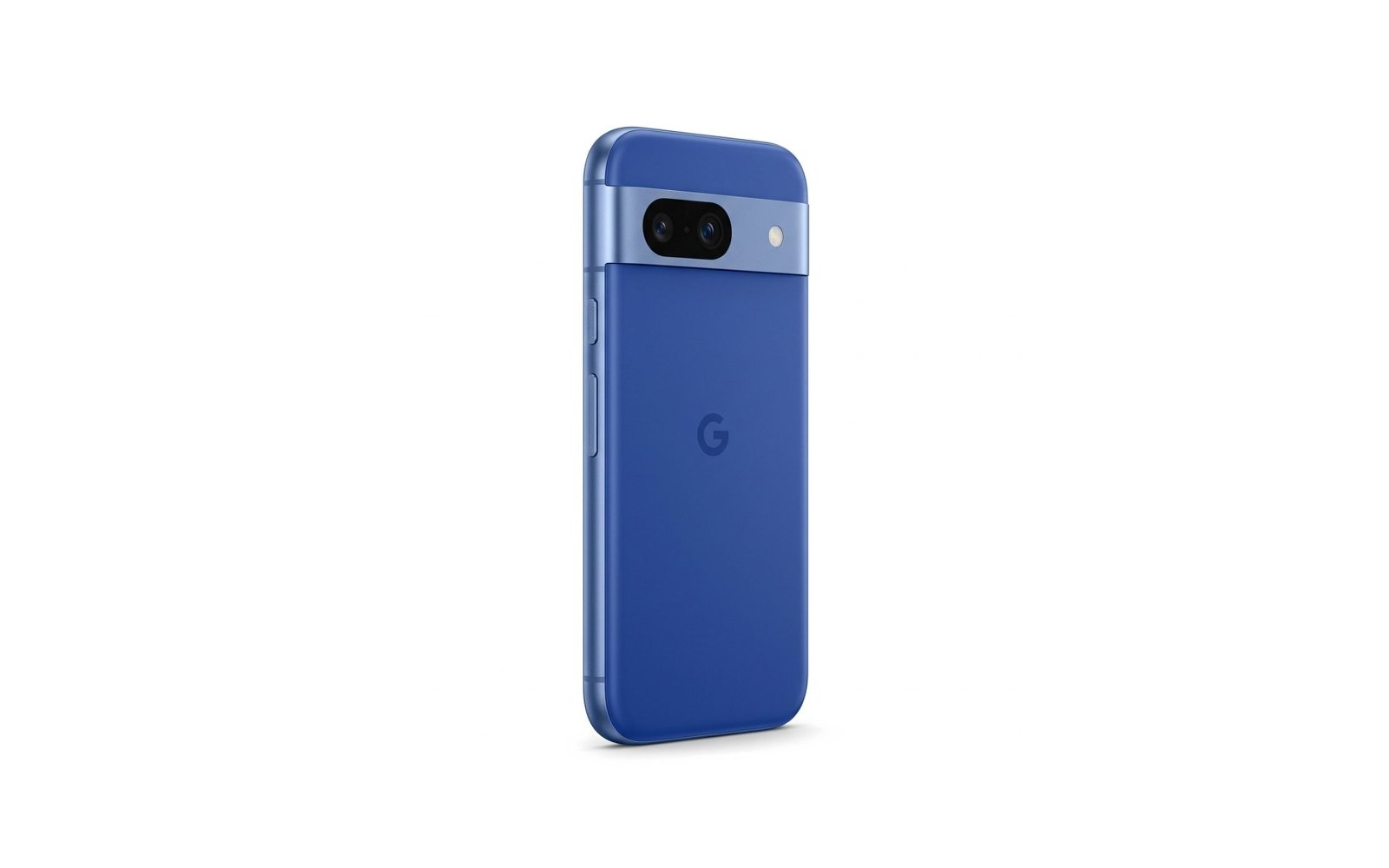
- Google Pixel 9 Pro XL: Adopts gently rounded frame corners, satin matte rear glass, and polished aluminum edges. Measuring 162.8 x 76.6 x 8.5 mm and weighing 221 grams, it is 2.4mm narrower and 11 grams lighter than the S24 Ultra. The curved corners make it substantially more comfortable to hold for extended reading sessions.
Samsung offsets its sharper shape with the integrated S Pen. Stored inside the lower left chassis, the stylus enables precision photo masking, handwritten notes, and remote shutter activation - features entirely absent on the Pixel.
Which Should You Buy?
If you prefer standard-sized flagships rather than pocket-stretching XL models, read our Google Pixel 9 vs. Samsung Galaxy S24 comparison to see how the compact base models compare.
Buy the Samsung Galaxy S24 Ultra if:
- You want desktop-class performance and sustained gaming: Qualcomm's Snapdragon 8 Gen 3 runs rings around the Tensor G4 in demanding 3D games and heavy processing.
- You hate screen glare: Corning Gorilla Armor is one of the most effective anti-glare display innovations in modern smartphones.
- You use a stylus: The integrated S Pen is irreplaceable for note-takers, sketchers, and digital document signers.
- You can find it on sale: At current street prices between $950 and $1,050, it offers exceptional hardware value.
Buy the Google Pixel 9 Pro XL if:
- You want point-and-shoot camera perfection: Google's image processing consistently produces more accurate skin tones and cleaner contrast without manual tuning.
- You want the brightest full-screen panel on the market: GSMArena measured an astonishing 2,365 nits of max auto brightness on 75% white.
- You prioritize palm comfort: The rounded frame corners and narrower body make one-handed use far less taxing.
- You want 16GB RAM standard: Google provides 16GB across all storage tiers to guarantee long-term Gemini AI performance.
For the next-generation flagship matchup, read our head-to-head Galaxy S26 Ultra vs Pixel 11 Pro XL comparison. If you want flagship camera quality and smooth 120Hz performance on a modest budget, explore our ranked guide to the best phones under $500.
Sources
- GSMArena: Google Pixel 9 Pro XL In-Depth Review: Measured 2,365 nits max auto brightness (75% white), Active Use Score of 12:31h, and battery sub-scores.
- GSMArena: Samsung Galaxy S24 Ultra In-Depth Review: Measured 1,447 nits max auto brightness (75% white), Active Use Score of 13:49h, and 45W charging curve (69% in 30 min).
- Tom's Guide: Google Pixel 9 Pro XL Review: Display test findings (2,469 nits HDR peak), battery rundown results, and camera comparison analysis.
- Tom's Guide: Samsung Galaxy S24 Ultra Review: Benchmark analysis, Snapdragon 8 Gen 3 for Galaxy metrics, and Gorilla Armor anti-glare evaluation.
- The Verge: Samsung Galaxy S24 Ultra Review: Real-world evaluation of Gorilla Armor reflection reduction and titanium chassis ergonomics by Allison Johnson.
- The Verge: Google Pixel 9 Pro XL Review: Real-world camera comparison, 42MP selfie autofocus test, and Tensor G4 thermal stability analysis.
- Samsung US: Galaxy S24 Ultra Technical Specifications: Official hardware dimensions, camera sensor specifications, S Pen details, and battery specs.
- Google Store: Pixel 9 Pro XL Technical Specifications: Official Super Actua display ratings, 5,060 mAh battery, 37W wired charging, and camera hardware specs.
*Published: 27 September 2026 · Last updated: 27 September 2026*
*TechSilico does not accept free manufacturer review hardware. Every measurement above was verified against instrumented laboratory test results published by the cited research outlets.*
Independent Testing Lab Benchmarks & Measurements
Benchmark measurements and evaluations cross-referenced from named independent testing laboratories:
The Pixel 9 Pro XL managed a stunning 2365 nits in our standard test with a 75% white pattern.
The Galaxy S24 Ultra turned in an Active Use Score of 13:49h, while maximum auto brightness hit 1447 nits in the same 75% test.
The Pixel 9 Pro XL's display is remarkably bright and legible outdoors, with color reproduction that remains very faithful to reality.
Samsung's Gorilla Armor glass is a genuine breakthrough in outdoor screen usability, cutting reflections to a degree we haven't seen on any other flagship.
The Galaxy S24 Ultra's anti-reflective coating is subtle until you hold it next to another phone, at which point it's obvious how much glare it cuts out.
The Pixel 9 Pro XL feels like Google's most polished hardware ever, with much better thermals and a display that's easily readable under direct August sunlight.
Corning Gorilla Armor reduces reflection by up to 75% and enhances scratch resistance by four times compared to typical aluminosilicate glass.
Super Actua display with up to 3,000 nits peak brightness, 1-120Hz LTPO OLED, and 16GB of RAM.
Pros & Cons Consensus
Samsung Galaxy S24 Ultra
- Gorilla Armor glass reduces surface reflections by up to 75% according to Corning and Samsung
- Higher GSMArena Active Use Score of 13:49h (with 9:36h of sustained gaming endurance)
- Snapdragon 8 Gen 3 for Galaxy delivers 2,300 single-core and 7,100 multi-core in Geekbench 6
- Integrated S Pen stylus with low-latency Bluetooth remote controls
- Faster 45W wired charging reaches 69% in 30 minutes in GSMArena's bench test
- Boxier, sharp-cornered titanium frame can dig into palms during one-handed use
- Full-screen auto peak brightness of 1,447 nits in GSMArena's test trails the Pixel 9 Pro XL
- Higher launch retail price of $1,299.99 for 256GB
Google Pixel 9 Pro XL
- Class-leading Super Actua display hit 2,365 nits max auto brightness in GSMArena's 75% white test
- Outstanding 42MP front selfie camera with phase detection autofocus and ultrawide 103° FoV
- Ergonomic flat satin glass back and rounded corner radius make the 6.8-inch chassis easier to hold
- Excellent 12:18h web browsing battery runtime in GSMArena's battery test suite
- Lower base starting MSRP of $1,099 with 16GB of unified RAM across all storage tiers
- Tensor G4 chip lags in heavy sustained 3D gaming and synthetic multi-core benchmarks
- Wired charging maxes out at 37W on Google's 45W PPS charger
- Base $1,099 model includes only 128GB of internal storage
Samsung Galaxy S24 Ultra
The Galaxy S24 Ultra is the more versatile computing device, while the Pixel 9 Pro XL is the superior pure camera phone.
If you want maximum performance, longer battery life in mixed use, the integrated S Pen stylus, and antireflective Gorilla Armor glass, the Galaxy S24 Ultra justifies its cost - especially at current street prices below $1,050. However, if your priority is effortless photography with true-to-life skin tones, a dazzling 2,365-nit display, and clean software ergonomics at $1,099, choose the Pixel 9 Pro XL.
Choose Samsung Galaxy S24 Ultra If:
- You want the fastest Android processor available with Qualcomm Snapdragon 8 Gen 3
- You want the reflection-killing benefits of Corning Gorilla Armor glass
- You use a stylus for digital signatures, note-taking, or precision editing
- You play high-frame-rate mobile games that demand sustained GPU throughput
Choose Google Pixel 9 Pro XL If:
- You want the brightest full-screen OLED panel measured by GSMArena at 2,365 nits
- You prefer a rounded, more comfortable chassis that doesn't poke your palms
- You prioritize point-and-shoot camera consistency and realistic skin tones
- You want 16GB of RAM standard at a $1,099 starting price
Frequently Asked Questions
Which phone has the better screen: Galaxy S24 Ultra or Pixel 9 Pro XL?
It depends on whether you value pure light emission or reflection rejection. In GSMArena's instrumented display tests, the Pixel 9 Pro XL achieved a staggering 2,365 nits of max auto brightness on a 75% white pattern, compared to 1,447 nits on the Galaxy S24 Ultra. However, Samsung equipped the S24 Ultra with Corning Gorilla Armor glass, which cuts ambient surface reflections by up to 75%. In bright direct daylight, the Galaxy's low reflectance makes it nearly as easy to read as the brighter Pixel.
How do the battery lives of the S24 Ultra and Pixel 9 Pro XL compare?
In GSMArena's standardized Active Use Score, the Galaxy S24 Ultra lasted 13 hours and 49 minutes, while the Pixel 9 Pro XL achieved 12 hours and 31 minutes. The two phones are comparable in web browsing (12:18h on Pixel vs. 11:06h on Galaxy) and video streaming (14:35h on Pixel vs. 13:53h on Galaxy). Samsung's primary advantage is in gaming efficiency, running for 9:36h versus 7:38h on the Pixel due to Qualcomm's superior GPU architecture.
Is the Snapdragon 8 Gen 3 significantly faster than the Tensor G4?
Yes, in raw compute and heavy gaming. The Snapdragon 8 Gen 3 for Galaxy in the S24 Ultra scores around 2,300 single-core and 7,100 multi-core in Geekbench 6, whereas Google's Tensor G4 scores approximately 1,950 single-core and 4,650 multi-core. For everyday tasks like app launching, navigation, and web browsing, both feel exceptionally fast, but Samsung holds a significant advantage for 3D gaming and prolonged video rendering.
Does the Pixel 9 Pro XL take better photos than the Galaxy S24 Ultra?
For most users, yes. Reviewers at The Verge and Tom's Guide consistently praise Google's image processing for more natural shadow tones, realistic skin hues, and sharper moving subject capture with minimal shutter lag. Samsung's S24 Ultra provides greater optical zoom versatility with separate 3x and 5x optical telephoto lenses and higher raw resolution (200MP main camera), but its post-processing can still oversaturate greens and skies.
Does the S24 Ultra come with an S Pen stylus?
Yes. The Galaxy S24 Ultra includes a built-in S Pen stylus that docks inside the titanium chassis. It supports Bluetooth low-energy remote gestures, note-taking on the lock screen, precision document signing, and photo editing. The Pixel 9 Pro XL does not support active stylus input.