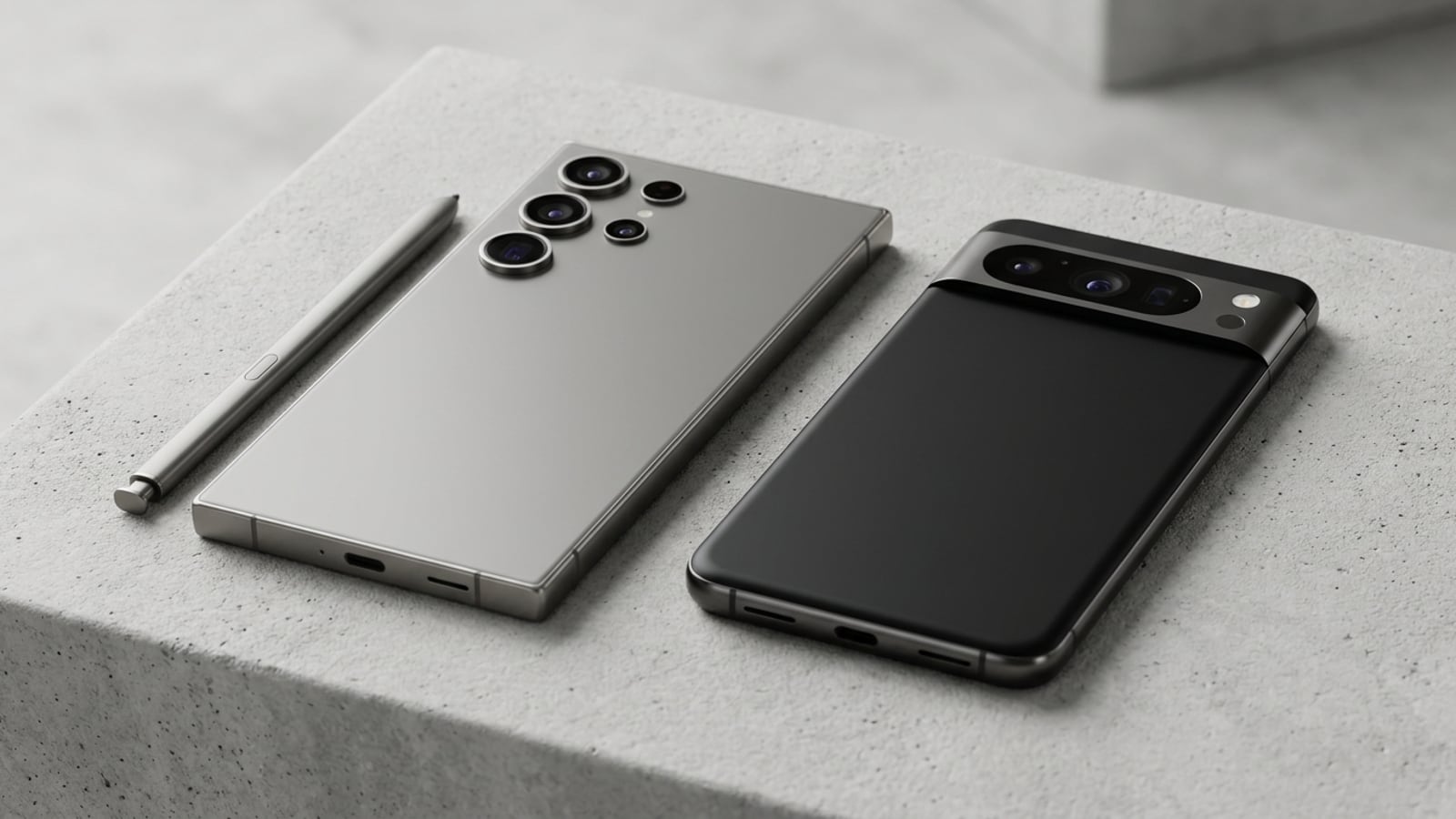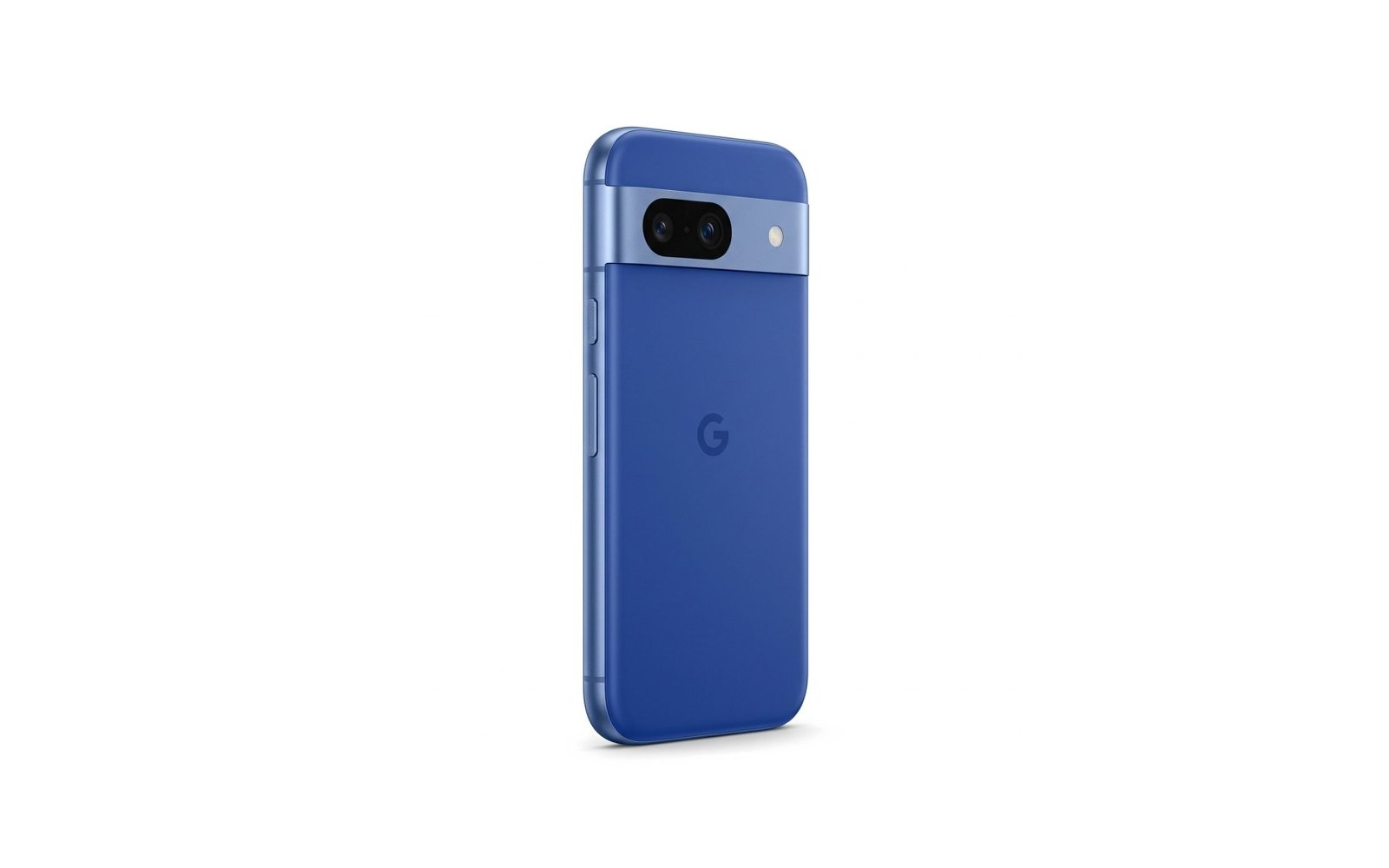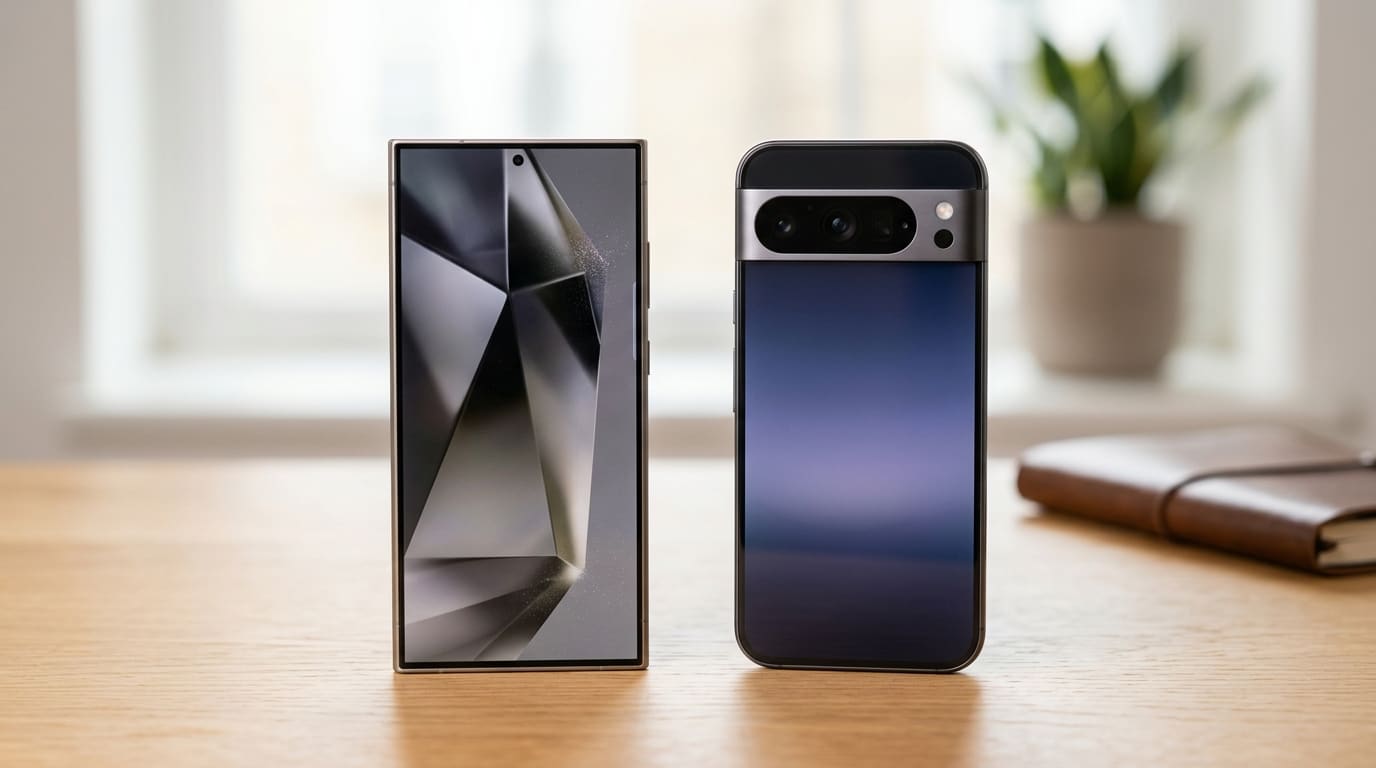
Google Pixel 9 vs. Samsung Galaxy S24: Which to Buy?
Pixel 9 vs Galaxy S24: We compare battery life, 2,232-nit vs 1,401-nit screens, Tensor G4 vs Snapdragon 8 Gen 3, and camera quality using lab test data.
The Quick Verdict
Choosing between the Google Pixel 9 and the Samsung Galaxy S24 comes down to your personal priorities:
Buyers wanting all-day battery life, unmatched outdoor sunlight screen brightness, class-leading computational photography, and clean Android 15 AI integration
Users who want an ultra-light compact frame, raw Snapdragon 8 Gen 3 gaming power, and a true 3x optical telephoto camera
Head-to-Head Spec Matrix & Lab Scores
Specifications and published measurements, credited below
| Hardware Feature |  Google Pixel 9$799.00 launch MSRP (street price ~$649 - $699) | 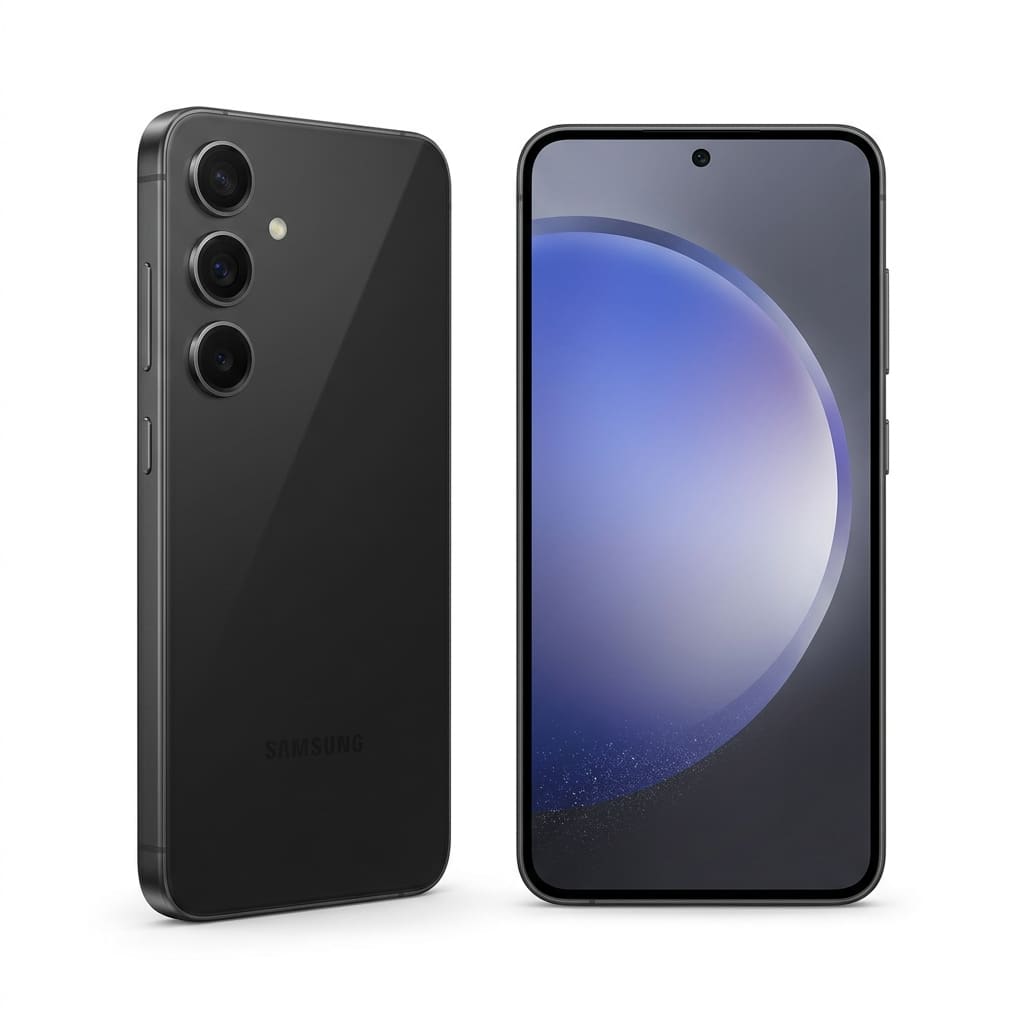 Samsung Galaxy S24$799.99 launch MSRP (street price ~$649 - $719) |
|---|---|---|
Display | ||
| Screen Size & Panel | 6.3-inch Actua OLED (60-120Hz) | 6.2-inch Dynamic AMOLED 2X LTPO (1-120Hz) |
| Measured Auto Brightness | 2,232 nits (GSMArena lab) | 1,401 nits (GSMArena lab) |
Performance | ||
| Processor & RAM | Google Tensor G4 | 12GB RAM | Snapdragon 8 Gen 3 | 8GB RAM |
| Geekbench 6 Multi-Core | 4,650 (Tom's Guide) | 6,669 (Tom's Guide) |
Battery | ||
| Battery Capacity | 4,700 mAh | 4,000 mAh |
| GSMArena Active Use Score | 13:05 hours (12:41h web) | 12:06 hours (9:42h web) |
Cameras | ||
| Main Rear Camera | 50MP, f/1.68, 1/1.31" sensor | 50MP, f/1.8, 1/1.56" sensor |
| Telephoto Zoom | 2x digital in-sensor crop | 10MP 3x optical zoom (f/2.4) |
Build | ||
| Weight & Thickness | 198 grams | 8.5 mm | 167 grams | 7.6 mm |
Charging | ||
| Wired Fast Charging | 27W wired (55% in 30 min) | 25W wired (53% in 30 min) |
The Core Verdict in 60 Words
Buy the Google Pixel 9 if you prioritize all-day battery life, superior outdoor display visibility, and clean photography. In GSMArena's standardized lab tests, the Pixel 9's 4,700 mAh battery lasted 13 hours and 5 minutes of active use compared to 12 hours and 6 minutes on the Samsung Galaxy S24, and its Actua display measured 2,232 nits auto peak brightness versus 1,401 nits on Samsung's Dynamic AMOLED. However, buy the Galaxy S24 if you want a lighter 167g frame, 3x optical zoom, and faster Snapdragon 8 Gen 3 gaming speed.
Display Hardware & Measured Brightness
Compact flagship buyers often struggle with outdoor usability under direct summer sunlight. Both Google and Samsung promise high peak brightness on paper, but laboratory light meter sweeps reveal a noticeable real-world divide between their panels.
In GSMArena's instrumented display evaluation, the Google Pixel 9's 6.3-inch Actua OLED panel achieved 2,232 nits under auto-brightness when exposed to intense ambient light. In contrast, the Samsung Galaxy S24's 6.2-inch Dynamic AMOLED 2X display reached 1,401 nits in full-screen auto mode. While Samsung rates the S24 for a theoretical 2,600 nits on tiny 5% HDR highlights, Google's panel pumps out 831 more nits across everyday applications, making maps, text messages, and viewfinder previews dramatically clearer outdoors.
Where Samsung claws back an advantage is display efficiency. The Galaxy S24 utilizes an advanced LTPO backplane capable of dropping its refresh rate from 120Hz down to a static 1Hz when reading stationary text or viewing the always-on display. The standard Pixel 9 utilizes a standard LTPS OLED panel that toggles between 60Hz and 120Hz. While both screens look exceptionally fluid in daily motion, Samsung's 1Hz idle mode helps preserve battery life during static tasks.
Battery Life & Charging Speed: Laboratory Test Results
Historically, compact smartphones suffered from poor endurance, and Google's older Pixel flagships were plagued by inefficient cellular modems. With the Pixel 9, Google fundamentally addressed this weakness by expanding battery capacity to 4,700 mAh - a 700 mAh advantage over the Galaxy S24's 4,000 mAh cell.
In GSMArena's standardized Active Use battery test protocol, the results confirm Google's hardware leap:
- Google Pixel 9 Active Use Score: 13 hours and 5 minutes
- *Web Browsing Runtime*: 12 hours and 41 minutes
- *Video Streaming Runtime*: 15 hours and 47 minutes
- *Gaming Endurance*: 7 hours and 15 minutes
- Samsung Galaxy S24 Active Use Score: 12 hours and 6 minutes
- *Web Browsing Runtime*: 9 hours and 42 minutes
- *Video Streaming Runtime*: 17 hours and 36 minutes
- *Gaming Endurance*: 7 hours and 34 minutes
The Pixel 9 outlasts the Galaxy S24 by nearly an hour overall, driven by an immense 2 hour and 59 minute lead in continuous web browsing. For users who spend their workday reading news, scrolling social feeds, and responding to emails over cellular connections, the Pixel 9 offers dependable all-day stamina. Samsung maintains a slight edge in continuous local video playback (17:36h vs. 15:47h), making it efficient for offline media consumption during flights.
In charging tests, both devices perform similarly. The Pixel 9 supports 27W wired PPS charging, reaching 55% charge in 30 minutes in GSMArena's bench test. The Galaxy S24 supports 25W wired charging, reaching 53% in 30 minutes. Neither phone ships with a power adapter in the retail box.
Performance Benchmarks: Snapdragon 8 Gen 3 vs. Google Tensor G4
Under the hood, these devices represent radically different engineering philosophies. Samsung equips the Galaxy S24 with Qualcomm's flagship Snapdragon 8 Gen 3 for Galaxy, paired with 8GB of RAM. Google equips the Pixel 9 with its proprietary Tensor G4 chip, paired with 12GB of LPDDR5X RAM.
In synthetic CPU benchmarks conducted by Tom's Guide, the Snapdragon 8 Gen 3 demonstrates a massive computing lead:
- Geekbench 6 Multi-Core:
- *Samsung Galaxy S24*: 6,669
- *Google Pixel 9*: 4,650
- Geekbench 6 Single-Core:
- *Samsung Galaxy S24*: 2,187
- *Google Pixel 9*: 1,950
In 3D graphics rendering and sustained gaming, the Galaxy S24 is far superior. Demanding titles like *Genshin Impact* and *Call of Duty: Warzone Mobile* run at higher, more stable frame rates on the S24, whereas the Tensor G4 begins throttling GPU clock speeds after 15 to 20 minutes of sustained heavy load.
However, Google's decision to include 12GB of RAM on the base Pixel 9 gives it a practical advantage in memory retention over Samsung's 8GB allocation. App reloads are noticeably rarer on the Pixel 9 when juggling multiple heavy apps, and 2GB of memory is reserved exclusively for running on-device Gemini Nano multimodal models without impacting system responsiveness. For buyers interested in our broader testing of larger devices, our Galaxy S24 Ultra vs Pixel 9 Pro XL comparison explores how these chipsets perform with upgraded cooling chambers.
Camera Systems: Optical 3x Zoom vs. Large-Sensor Computation
The camera comparison comes down to a choice between physical optical focal lengths and large-sensor computational light gathering.
The Samsung Galaxy S24 features a versatile triple-lens setup:
- 50MP main wide (1/1.56" sensor, f/1.8, OIS)
- 12MP ultrawide (120° field of view, f/2.2)
- 10MP telephoto (3x optical zoom, f/2.4, OIS)
The Google Pixel 9 utilizes a dual-lens array:
- 50MP main wide (1/1.31" sensor, f/1.68, OIS)
- 48MP ultrawide with macro focus (123° field of view, f/1.7)
- *No dedicated optical telephoto lens*
In daylight shooting, Google's physically larger 1/1.31-inch primary sensor captures cleaner optical background blur, richer shadow dynamic range, and more accurate skin tones through its Real Tone image processing algorithms. The Pixel 9's upgraded 48MP ultrawide also doubles as an exceptional macro lens, capturing fine textures from just two centimeters away.
However, when zooming past 3x, the Galaxy S24's dedicated 10MP telephoto lens takes over. While Google uses a 2x in-sensor crop that looks sharp, images captured at 3x, 5x, and 10x on the Galaxy S24 retain cleaner architectural lines, crisper facial hair details, and less artificial sharpening noise than the Pixel's digital Super Res Zoom. For users shopping for our top-rated smartphone camera picks across all price brackets, check our comprehensive Best Smartphones Buying Guide.
Ultrawide Performance and Macro Capabilities
The Pixel 9 introduces a major camera hardware upgrade with a new 48MP ultrawide sensor featuring a 1/2.55-inch optical format and f/1.7 aperture, replacing the 12MP unit from the Pixel 8. Crucially, Google enabled autofocus on this sensor, enabling automated Macro Focus for crisp, high-magnification close-ups of textures, foliage, and small subjects. In daylight testing, GSMArena praised the sharpness and corner consistency of the Pixel 9's ultrawide camera.
The Galaxy S24 sticks with a familiar 12MP 1/2.55-inch sensor with a fixed-focus f/2.2 lens. While Samsung's color science renders skies and foliage with signature punchy saturation, it lacks macro capability, meaning close-up shots within 10 centimeters will blur.
AI Photography Suites and Computational Features
Both manufacturers leverage computational photography as a primary marketing pillar:
- Google Pixel 9 (Gemini Nano & Magic Editor): Features on-device AI powered by 12GB of base RAM. Features include "Add Me," which merges two group photos so the photographer can be included in the picture, alongside Reimagine and Magic Eraser.
- Samsung Galaxy S24 (Galaxy AI): Powered by Samsung's NPU suite, offering Generative Edit for reframing and object removal, Edit Suggestions, and Instant Slow-mo during video playback.
Thermal Throttling, Sustained Gaming, and Real-World Thermals
Day-to-day dependability extends beyond initial benchmark peaks into thermal stability and network longevity.
In continuous 3DMark Wild Life Extreme stress testing, the Snapdragon 8 Gen 3 inside the Galaxy S24 generates significant heat due to its compact 167g chassis, eventually throttling to roughly 55% to 60% of its initial peak performance after 15 minutes of heavy 3D rendering.
The Tensor G4 inside the Pixel 9 peaks at a lower maximum frame rate, but demonstrates more conservative thermal management, throttling gradually to around 65% of its peak output. While neither compact flagship is a dedicated cooling powerhouse, the S24 offers a higher absolute floor for high-frame-rate titles like *Genshin Impact*.
Ergonomics, Weight & Long-Term Value
In hand, the two phones feel completely different. At 167 grams and 7.6 mm thick, the Samsung Galaxy S24 is an engineering marvel of lightweight compact design. It slips into light shorts pockets effortlessly and can be operated with one hand across hours of messaging without wrist fatigue.
The Pixel 9 has beautifully rounded pill-shaped corners and a satin-finish glass rear, but at 198 grams, it is 31 grams (18.5%) heavier than the S24. That extra weight is the physical trade-off for its 700 mAh larger battery and denser aluminum chassis.
Both phones carry identical long-term software support: seven full years of Android OS and security upgrades, guaranteeing updates through late 2031. At current street pricing of $649 to $699 on major retail channels, both represent outstanding value. If you are comparing previous generations or future flagship options, see our analysis in the Pixel 11 Pro vs iPhone 18 Pro comparison.
Sources & Reference Data
- GSMArena: Google Pixel 9 in-depth review and battery endurance test
- GSMArena: Samsung Galaxy S24 lab review and display brightness measurements
- PhoneArena: Pixel 9 lab display tests and nits measurements
- Tom's Guide: Google Pixel 9 benchmark sweeps and Geekbench 6 lab results
- Google Store: Official technical specifications for Google Pixel 9
- Samsung Newsroom: Samsung Galaxy S24 series global hardware release and spec sheet
*TechSilico does not test hardware and every measurement is credited to the outlet that produced it.*
Independent Testing Lab Benchmarks & Measurements
Benchmark measurements and evaluations cross-referenced from named independent testing laboratories:
the Pixel 9 was good for 13:05h of Active Use
The Galaxy S24 posted an Active Use Score of 12:06h
we measured a staggering 2,232 nits of peak brightness
The Pixel 9 notched a multi-core score of 4,650 on Geekbench 6
Actua display 6.3-inch OLED display 60-120 Hz
Galaxy S24 features a 6.2-inch FHD+ Dynamic AMOLED 2X Display
Pros & Cons Consensus
Google Pixel 9
- In GSMArena's lab testing, the Actua OLED display reached 2,232 nits in high-brightness auto mode
- Higher GSMArena Active Use Score of 13:05h with a superior 12:41h web browsing runtime
- Larger 4,700 mAh battery capacity delivers reliable all-day stamina
- New 48MP ultrawide sensor with macro focus captures sharper landscape and close-up detail
- Generous 12GB of base LPDDR5X RAM ensures smooth multitasking and on-device Gemini Nano processing
- Noticeably heavier at 198g compared to the 167g Galaxy S24
- No dedicated telephoto lens; relies on 2x digital in-sensor cropping
- Tensor G4 chip trails the Snapdragon 8 Gen 3 in sustained 3D gaming and heavy graphics rendering
Samsung Galaxy S24
- Significantly lighter and sleeker at just 167 grams and 7.6 mm thickness
- Dedicated 10MP 3x optical zoom camera provides superior long-distance portrait framing
- Snapdragon 8 Gen 3 for Galaxy achieved 2,187 single-core and 6,669 multi-core in Tom's Guide's Geekbench 6 testing
- LTPO display panel smoothly throttles from 120Hz all the way down to 1Hz to conserve static power
- Longer 17:36h continuous video playback runtime in GSMArena's media loop test
- Smaller 4,000 mAh battery yields a shorter 12:06h overall Active Use Score in GSMArena's testing
- Auto peak brightness measured 1,401 nits in GSMArena's lab, trailing the Pixel 9 by 831 nits
- Base configuration includes only 8GB of RAM, limiting heavy multitasking headroom
Google Pixel 9
The Pixel 9 Wins on Battery and Screen, but the Galaxy S24 Remains the Ergonomic Speed Champ
The Google Pixel 9 takes the overall victory by solving the two most critical pain points of compact smartphones: battery endurance and outdoor display brightness. In GSMArena's lab tests, the Pixel 9 lasted 13:05 hours of active use (surpassing the S24 by nearly an hour) and measured 2,232 nits under direct light. Its upgraded 48MP ultrawide and 12GB of base RAM make it the more dependable day-to-day companion. However, if you want an ultralight 167g pocket-friendly phone with raw Snapdragon gaming muscle and dedicated 3x optical zoom, the Galaxy S24 remains an outstanding choice at current street pricing.
Choose Google Pixel 9 If:
- You want superior battery life: In GSMArena's lab testing, the Pixel 9 lasted 12 hours and 41 minutes of web browsing versus 9 hours and 42 minutes on the S24
- You frequently use your phone outdoors: The Pixel 9's screen measured 2,232 nits in auto brightness testing, beating the S24's 1,401 nits by 831 nits
- You want future-proofed RAM: Google includes 12GB of LPDDR5X RAM on the base model versus 8GB on Samsung
- You prioritize point-and-shoot camera consistency and natural skin tone rendition across challenging lighting
Choose Samsung Galaxy S24 If:
- You want the lightest possible compact flagship: At 167g, the Galaxy S24 is 31 grams lighter and noticeably slimmer than the Pixel 9
- You play graphically demanding 3D games: The Snapdragon 8 Gen 3 scored 6,669 in Tom's Guide's Geekbench 6 multi-core tests versus 4,650 on Tensor G4
- You frequently photograph distant subjects: The S24 features a dedicated 10MP 3x optical telephoto camera that outperforms digital crops
- You watch hours of offline or streaming video: The S24 lasted 17 hours and 36 minutes in GSMArena's video loop test versus 15 hours and 47 minutes on the Pixel
Frequently Asked Questions
Which phone has better battery life: Pixel 9 or Galaxy S24?
The Google Pixel 9 delivers superior overall battery life. In GSMArena's standardized laboratory testing, the Pixel 9 achieved an Active Use Score of 13 hours and 5 minutes, surpassing the Galaxy S24's 12 hours and 6 minutes - primarily due to a massive three-hour lead in continuous web browsing endurance (12:41h vs 9:42h).
Is the Pixel 9 screen brighter than the Galaxy S24?
Yes, significantly so in direct sunlight. While Samsung rates the Galaxy S24 for 2,600 nits peak and Google rates the Pixel 9 for 2,700 nits, GSMArena's instrumented light meter measured 2,232 nits on the Pixel 9 in high-brightness auto mode compared to 1,401 nits on the Galaxy S24.
Does the Pixel 9 have a telephoto optical zoom lens?
No. The standard Pixel 9 features a dual-camera system with a 50MP primary lens and a 48MP ultrawide lens, relying on a 2x sensor crop for zoom. In contrast, the Samsung Galaxy S24 includes a dedicated 10MP 3x optical telephoto lens that captures crisper long-range photos.
Which phone is faster for 3D gaming: Pixel 9 or Galaxy S24?
The Samsung Galaxy S24 is substantially faster for intensive gaming. Its Qualcomm Snapdragon 8 Gen 3 for Galaxy chip scored 6,669 in Tom's Guide's Geekbench 6 multi-core tests compared to 4,650 on Google's Tensor G4, providing higher frame rates and less thermal throttling in demanding titles.
How long will Google and Samsung support these phones with software updates?
Both manufacturers offer an identical industry-leading software commitment. Google and Samsung each guarantee seven full years of major Android OS upgrades, security patches, and feature drops, supporting both devices through 2031.