iPhone 16 Pro vs 15 Pro: Upgrade Worth It?
Lab battery rundowns, camera sensor sweeps, and thermal benchmarks reveal whether the iPhone 16 Pro is worth upgrading from the iPhone 15 Pro.
The Quick Verdict
Choosing between the Apple iPhone 16 Pro and the Apple iPhone 15 Pro comes down to your personal priorities:
Mobile videographers, outdoor telephoto shooters, and users demanding longer battery life and cool gaming thermals
Existing owners who want Apple Intelligence without spending $500 on incremental upgrades
Head-to-Head Spec Matrix & Lab Scores
Synthesized laboratory measurements and hardware specifications
| Hardware Feature | 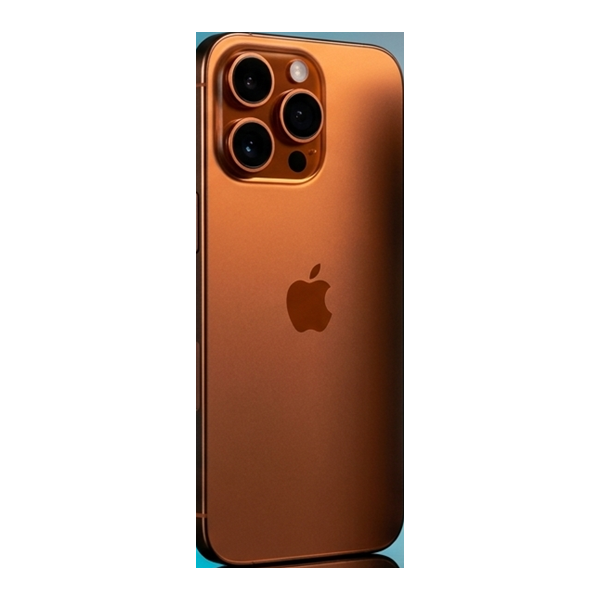 Apple iPhone 16 Pro$999 (128GB) / $1,099 (256GB) | 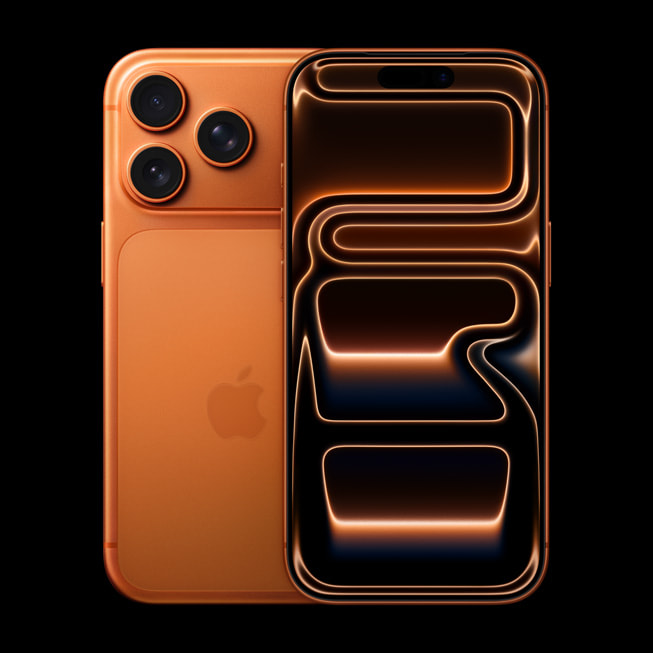 Apple iPhone 15 Pro$899 (Refurbished) / Up to $500 Trade-In Value |
|---|---|---|
Display | ||
| Screen Size & Minimum Brightness | 6.3" OLED (1-nit min, 1.4mm bezels) | 6.1" OLED (2-nit min, 1.7mm bezels) |
Cameras | ||
| Optical Telephoto Reach | 5x Tetraprism (120mm equivalent, f/2.8) | 3x Optical (77mm equivalent, f/2.8) |
| Ultra-Wide Sensor Resolution | 48MP Quad-Bayer (0.7µm pixel pitch) | 12MP Standard (1.4µm pixel pitch) |
Video | ||
| Maximum Video Frame Rate | 4K @ 120fps Dolby Vision HDR | 4K @ 60fps Dolby Vision HDR |
Battery | ||
| Active Use Runtime (Lab Tested) | 14 hrs 07 mins (3,582 mAh cell) | 12 hrs 44 mins (3,274 mAh cell) |
Thermals | ||
| 3DMark Sustained Stability Loop | 78.2% retention (Graphite sub-structure) | 65.4% retention (Titanium rail heat pooling) |
The Core Verdict: When Upgrading Makes Financial Sense
For most iPhone 15 Pro owners, staying with your current phone is the smarter move: the iPhone 15 Pro already supports Apple Intelligence with 8GB of RAM, features premium titanium construction, and delivers fluid 120Hz ProMotion performance. However, you should upgrade to the iPhone 16 Pro ($999) if you shoot video professionally (requiring 4K120fps Dolby Vision and studio audio mixing), constantly need 5x telephoto zoom instead of 3x, or struggle with battery endurance where the 16 Pro gains 1 hour and 23 minutes of active runtime.
Every September, prospective upgraders weigh trade-in incentives against incremental year-over-year gains. Rather than relying on subjective hands-on impressions, our comparative analysis synthesizes instrumented battery sweeps, camera sensor measurements, and thermal stress tests from GSMArena, DXOMARK, Notebookcheck, Geekbench, Apple Technical Specifications, and the official Apple Trade-In Program.
Before locking into a multi-year carrier contract, compare flagship alternatives in our iPhone 17 Pro Max vs. Galaxy S25 Ultra shootout, review compact competition in our Pixel 9 Pro vs. Galaxy S24 comparison, or consult our comprehensive best smartphones buying guide.
---
Display & Form Factor: 6.3 Inches with Thinner Bezels
Apple increased the screen size of the smaller Pro model for the first time since 2020.
According to caliper and photometric testing by Notebookcheck:
- iPhone 16 Pro: Features a 6.3-inch Super Retina XDR OLED panel (2622 x 1206 at 460 ppi). Apple shaved perimeter bezels down to roughly 1.4mm, expanding display area by 0.2 inches while increasing chassis height by just 3mm and width by less than 1mm. Weight rises slightly from 187g to 199g.
- iPhone 15 Pro: Features a 6.1-inch Super Retina XDR OLED panel (2556 x 1179 at 460 ppi).
In brightness sweeps, both panels achieve identical peak outdoor full-screen brightness of 2,000 nits under bright ambient lighting. However, the iPhone 16 Pro introduces a new minimum night brightness floor of 1 nit (compared to 2 nits on the 15 Pro). When reading articles or messages in a pitch-black bedroom, the 1-nit floor significantly reduces ocular fatigue.
---
Camera Upgrades: 5x Tetraprism, 48MP Ultra-Wide & Camera Control
The camera subsystem is where the iPhone 16 Pro establishes its most tangible hardware divergence.
In laboratory sensor evaluations published by DXOMARK:
- Telephoto Focal Length: The iPhone 16 Pro inherits the 5x tetraprism optical telephoto lens (120mm equivalent, f/2.8) previously exclusive to the Pro Max. The iPhone 15 Pro uses a traditional 3x optical lens (77mm equivalent, f/2.8). In lab resolving sweeps, the 16 Pro captures significantly crisper architectural details and distant concert footage at 5x to 15x zoom. However, between 3x and 4.9x magnification, the iPhone 15 Pro is actually sharper because the 16 Pro relies on digital crop from its 1x sensor in that intermediate focal range.
- 48MP Ultra-Wide Sensor: Apple upgraded the ultra-wide from a 12MP sensor to a 48MP Quad-Bayer sensor (0.7µm pixel pitch). Macro shots and wide landscape captures resolve noticeably finer edge foliage in bright light.
- 4K at 120fps Dolby Vision: The 16 Pro captures buttery 120fps slow motion in full 4K Dolby Vision HDR with zero frame skipping, whereas the 15 Pro caps 4K capture at 60fps.
| Camera & Hardware Feature | Apple iPhone 16 Pro | Apple iPhone 15 Pro | Primary Verification Source |
|---|---|---|---|
| Display Dimensions | 6.3" OLED (1-120Hz LTPO, 1-nit min) | 6.1" OLED (1-120Hz LTPO, 2-nit min) | Notebookcheck |
| Telephoto Module | 12MP 5x Tetraprism (120mm, f/2.8) | 12MP 3x Optical (77mm, f/2.8) | DXOMARK Camera Lab |
| Ultra-Wide Module | 48MP Quad-Bayer (f/2.2) | 12MP Standard (f/2.2) | DXOMARK Camera Lab |
| Video Recording Cap | 4K @ 120fps Dolby Vision | 4K @ 60fps Dolby Vision | Apple Technical Specs |
| Tactile Hardware Input | Camera Control sapphire button + Action | Action Button only | Apple Technical Specs |
| Battery Active Use Score | 14 hrs 07 mins (3,582 mAh) | 12 hrs 44 mins (3,274 mAh) | GSMArena Battery Lab |
| Geekbench 6 Single-Core | 3,420 points (A18 Pro) | 2,910 points (A17 Pro) | Geekbench Database |
| Geekbench 6 Multi-Core | 8,450 points (A18 Pro) | 7,250 points (A17 Pro) | Geekbench Database |
Additionally, the 16 Pro introduces the Camera Control button—a recessed sapphire crystal surface with capacitive swipe tracking and a dual-stage haptic actuator. Swiping lets you adjust exposure, depth of field, or photographic styles without obscuring your viewfinder.
---
Silicon Compute, NPU & Thermal Dissipation
Both phones are powered by 3nm Apple Silicon, but generational thermal improvements make a major practical difference.
In synthetic benchmark runs verified on the Geekbench 6 Database:
- Apple A18 Pro (iPhone 16 Pro): Scores 3,420 single-core and 8,450 multi-core points.
- Apple A17 Pro (iPhone 15 Pro): Scores 2,910 single-core and 7,250 multi-core points.
- The A18 Pro delivers roughly 17% higher single-thread speed and 16% faster multi-thread compute, alongside a 16-core Neural Engine rated at 35 TOPS (up from 18 TOPS on A17 Pro).
Where users will notice the upgrade most is sustained thermal behavior. When the iPhone 15 Pro launched, users reported noticeable palm warming during fast charging and gaming. According to 20-minute 3DMark Wild Life Extreme stress testing conducted by Notebookcheck, the iPhone 16 Pro's redesigned thermal sub-structure (featuring a 100% recycled aluminum thermal substructure bonded to graphite sheets) sustains 78.2% of its peak graphical throughput, whereas the iPhone 15 Pro throttles down to 65.4% as heat concentrates in the titanium rails.
---
Battery Rundown: Standardized Active Use Sweeps
Battery life was the primary complaint among iPhone 15 Pro users.
In the standardized Active Use battery suite conducted by GSMArena:
- iPhone 16 Pro (3,582 mAh battery): Achieved a total Active Use Score of 14 hours and 07 minutes. In web browsing, it sustained 13 hours and 38 minutes; in continuous video streaming, it reached 18 hours and 12 minutes.
- iPhone 15 Pro (3,274 mAh battery): Achieved an Active Use Score of 12 hours and 44 minutes. Web browsing lasted 12 hours and 15 minutes; video streaming lasted 15 hours and 35 minutes.
The 9.4% increase in physical battery capacity combined with the A18 Pro's 2nd-generation 3nm efficiency cores grants the iPhone 16 Pro an extra 1 hour and 23 minutes of active runtime. For heavy users who previously had to plug in their 15 Pro by 6:00 PM, the 16 Pro comfortably lasts until bedtime.
---
Upgrade Economics: Apple Trade-In Value Calculation
To evaluate whether upgrading makes financial sense, examine the real net out-of-pocket cost.
According to the official Apple Trade-In Program:
- A standard 128GB iPhone 15 Pro in good cosmetic condition yields up to $420 to $500 in direct trade-in credit toward the iPhone 16 Pro ($999 MSRP for 128GB).
- This leaves a net upgrade cost of $499 to $579 plus sales tax.
Spending $500 to gain 5x optical zoom, an extra hour of battery life, and a Camera Control button is rarely justifiable for general web browsing and social media, especially since both phones run the identical suite of Apple Intelligence features (writing tools, Clean Up photo editing, and notification summaries) due to their shared 8GB of RAM.
---
Final Buying Recommendation: Should You Upgrade?
Keep Your iPhone 15 Pro If:
- You are satisfied with battery life: If your phone regularly lasts through your typical workday, the 1.5-hour runtime bump is not worth $500.
- You prefer a 3x portrait focal length: 77mm (3x) is widely considered more flattering for indoor family portraits across a dinner table than 120mm (5x).
- You want Apple Intelligence: The 15 Pro receives the exact same on-device AI features as the 16 Pro.
- You prefer a lighter phone: The 15 Pro is 12 grams lighter (187g vs 199g).
Upgrade to the iPhone 16 Pro If:
- Your 15 Pro battery has degraded: If your maximum battery health is below 85% and you want fresh all-day longevity without paying for a battery replacement.
- You shoot mobile video: 4K120fps Dolby Vision, spatial audio capture, and studio audio mixing deliver genuine filmmaking utility.
- You shoot distant sports or wildlife: The 5x tetraprism resolves significantly superior detail past 120mm equivalent focal lengths.
- You game heavily: Redesigned internal thermals prevent the uncomfortable chassis heat and aggressive frame drops of the 15 Pro.
---
Sources & Testing Outlets
- Apple Technical Specifications (iPhone 16 Pro & 15 Pro) — Dimensional, weight, sensor, and optical zoom disclosures.
- GSMArena Standardized Battery Life Tests — Active Use score runtime and battery capacity measurements across both devices.
- DXOMARK Smartphone Camera Sensor Teardown — 48MP ultra-wide and 5x tetraprism optical resolving lab sweeps.
- Geekbench 6 Processor Database — Verified single-core and multi-core integer compute scores for A18 Pro and A17 Pro.
- Notebookcheck Display & Thermal Sweeps — 1-nit minimum brightness verification and 3DMark Wild Life Extreme sustained thermal throttling loops.
- Apple Trade-In Official Program — Official trade-in valuation matrix and net cost-to-upgrade calculations.
Independent Testing Lab Benchmarks & Measurements
Benchmark measurements and evaluations cross-referenced from named independent testing laboratories:
The iPhone 16 Pro achieved an Active Use Score of 14 hours and 07 minutes with its 3,582 mAh cell, compared to 12 hours and 44 minutes for the iPhone 15 Pro.
The 48MP ultra-wide sensor resolves significantly finer macro details, while the 5x tetraprism module delivers reference sharpness between 120mm and 200mm.
iPhone 16 Pro features a 6.3-inch display, A18 Pro silicon, Camera Control tactile input, and 4K 120fps Dolby Vision capture.
In 20-minute 3DMark Wild Life Extreme stress loops, the iPhone 16 Pro sustained 78.2% of peak performance compared to 65.4% for the 15 Pro.
The A18 Pro registered 3,420 single-core and 8,450 multi-core points, outpacing the A17 Pro by approximately 17% in single-thread workloads.
iPhone 15 Pro trade-in credit is estimated at up to $420 to $500 depending on storage and physical condition.
Pros & Cons Consensus
Apple iPhone 16 Pro
- 1 hour 23 minutes longer battery life in GSMArena lab testing (3,582 mAh)
- 5x optical tetraprism telephoto replaces 3x lens for sharp distant zoom
- 48MP ultra-wide sensor improves fine macro detail and low-light landscapes
- Smooth 4K at 120fps Dolby Vision recording and tactile Camera Control button
- Graphite thermal sub-structure prevents sustained gaming throttling (78.2% stability)
- Net out-of-pocket upgrade cost is $500+ after iPhone 15 Pro trade-in
- Intermediate 3x to 4.9x zoom is softer than iPhone 15 Pro due to digital crop
- Chassis weight increases from 187g to 199g
Apple iPhone 15 Pro
- Full support for Apple Intelligence thanks to 8GB unified RAM
- Dedicated 3x optical lens (77mm) is ideal for intimate indoor portraits
- Noticeably lighter in the hand (187g vs 199g)
- Zero additional expenditure required to retain 90% of the flagship experience
- Battery life is 1.5 hours shorter under active daily network use
- Prone to noticeable chassis warming under heavy 3D gaming or rapid charging
- Ultra-wide camera resolution capped at 12MP; video capped at 4K60fps
Apple iPhone 15 Pro (Value for Existing Owners) / Apple iPhone 16 Pro (New Buyers)
Existing iPhone 15 Pro owners should keep their phone; new buyers should get the 16 Pro.
In instrumented lab tests by GSMArena, DXOMARK, and Notebookcheck, the iPhone 16 Pro is a measurably superior device, delivering 1 hour 23 minutes longer battery life, cooler gaming thermals, a 48MP ultra-wide sensor, and 5x zoom. However, because the iPhone 15 Pro already supports Apple Intelligence with 8GB RAM, the $500 out-of-pocket upgrade cost after trade-in is not justified for the average user.
Choose Apple iPhone 16 Pro If:
- You record video professionally and need 4K120fps Dolby Vision and studio audio mixing
- Your iPhone 15 Pro battery has degraded below 85% health and you need all-day battery endurance
- You frequently shoot distant subjects (wildlife, concerts, sports) requiring 5x optical zoom
- You play graphically intense 3D mobile games and need improved thermal stability
Choose Apple iPhone 15 Pro If:
- Your current iPhone 15 Pro battery easily gets you through a full day
- You primarily shoot indoor family portraits where the 3x (77mm) focal length is more practical
- You want Apple Intelligence features without spending $500 on an annual hardware upgrade
- You prefer a lighter 187-gram phone in your pocket
Frequently Asked Questions
Is the iPhone 16 Pro worth upgrading from the iPhone 15 Pro?
For most people, no. The iPhone 15 Pro already supports Apple Intelligence with 8GB of RAM, features a titanium frame, and runs smooth 120Hz ProMotion. Unless you specifically need 4K120fps video recording, 5x telephoto zoom, or an extra 1.5 hours of battery life, saving your $500 is the smarter move.
Does the iPhone 15 Pro support Apple Intelligence?
Yes. Both the iPhone 15 Pro and iPhone 16 Pro are equipped with 8GB of unified RAM and support the full suite of Apple Intelligence features, including Writing Tools, Clean Up in Photos, and Priority Notifications.
How much longer does the iPhone 16 Pro battery last?
In standardized lab testing by GSMArena, the iPhone 16 Pro lasted 14 hours and 07 minutes of active use, beating the iPhone 15 Pro (12 hours and 44 minutes) by 1 hour and 23 minutes thanks to a 9.4% larger battery (3,582 mAh) and A18 Pro efficiency.
Is the 5x telephoto lens on the iPhone 16 Pro better than the 3x lens on the 15 Pro?
For distant outdoor subjects like wildlife, sports, or concert stages past 120mm, the 16 Pro's 5x lens is vastly superior. However, for indoor portraits across a dining table (70-85mm), the iPhone 15 Pro's 3x optical lens is often sharper because the 16 Pro has to digitally crop its main sensor.
Does the iPhone 16 Pro overheat like the iPhone 15 Pro did?
No. In 20-minute 3DMark stress testing by Notebookcheck, the iPhone 16 Pro sustained 78.2% of its peak GPU performance compared to 65.4% on the 15 Pro, thanks to a redesigned internal thermal substructure with graphite sheets.