Pixel 9 Pro vs. iPhone 16 Pro: Which Compact Flagship Wins?
Pixel 9 Pro vs iPhone 16 Pro: We compare 2,331-nit vs 1,510-nit displays, 13:11h vs 14:17h battery, and telephoto camera tests from Tom's Guide and GSMArena.
The Quick Verdict
Choosing between the Google Pixel 9 Pro and the Apple iPhone 16 Pro comes down to your personal priorities:
Android purists wanting the brightest compact display on the market, 7 years of OS updates, and effortless point-and-shoot computational photography
Power users demanding industry-leading CPU/GPU gaming muscle, unmatched 4K120fps Dolby Vision video recording, and longer battery endurance
Head-to-Head Spec Matrix & Lab Scores
Specifications and published measurements, credited below
| Hardware Feature |  Google Pixel 9 Pro$999 (128GB) / ~$899 street | 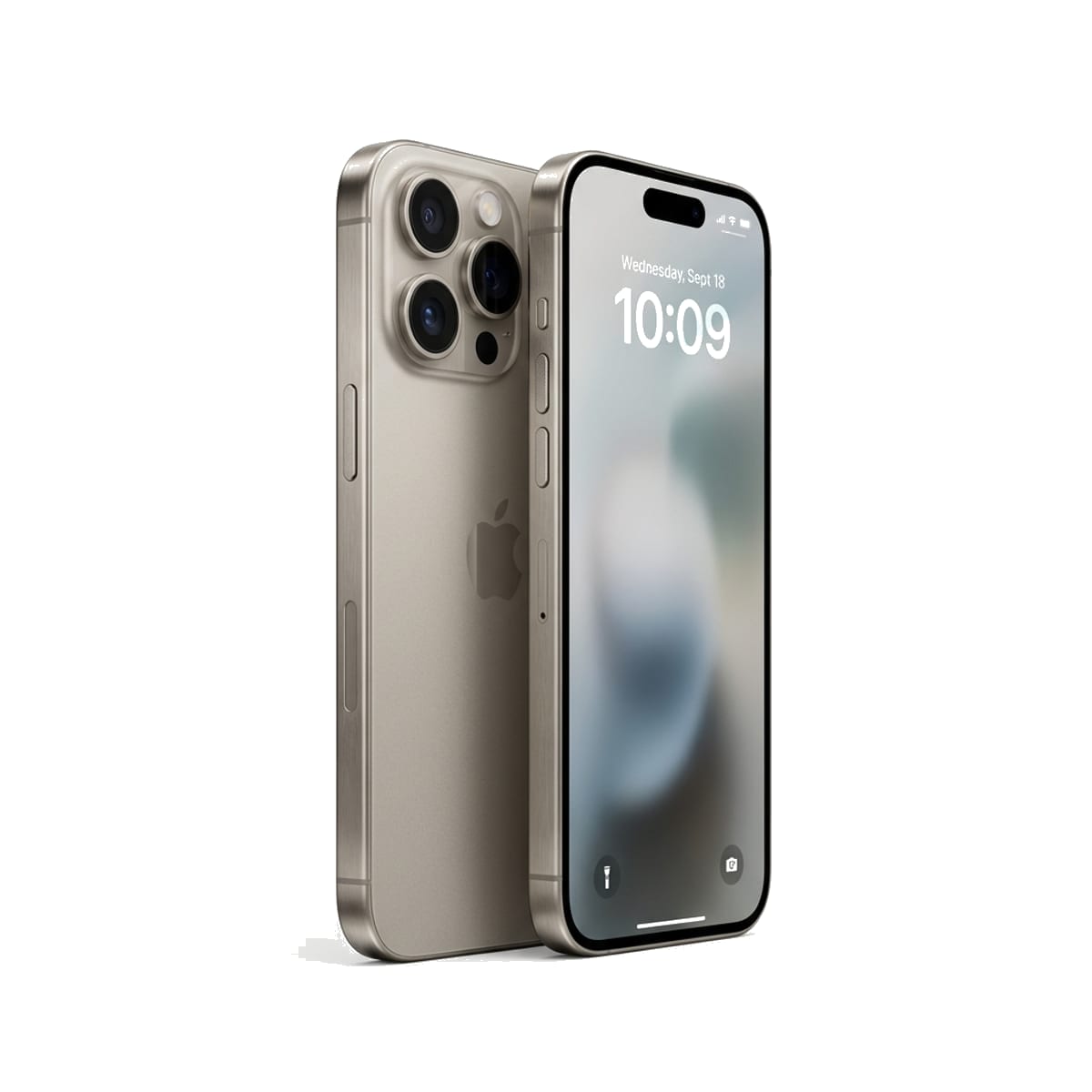 Apple iPhone 16 Pro$999 (128GB) |
|---|---|---|
Display | ||
| Display Size & Resolution | 6.3-inch Super Actua LTPO OLED (1280 x 2856, 495 ppi, 1-120Hz) | 6.3-inch Super Retina XDR LTPO OLED (1206 x 2622, 460 ppi, 1-120Hz) |
| Measured Peak Brightness | 2,331 nits (Tom's Guide outdoor test) | 1,510 nits (Tom's Guide outdoor test) |
Performance | ||
| Silicon & Architecture | Google Tensor G4 (4nm) | 16GB RAM | Apple A18 Pro (2nd-gen 3nm) | 8GB RAM |
| Geekbench 6 Multi-Core | 4,774 points (Tom's Guide) | 8,391 points (Tom's Guide) |
Battery | ||
| Battery Life & Endurance | 13:11h Active Use | 13h 37m 5G Web | 14:17h Active Use | 14h 07m 5G Web |
Charging | ||
| Wired Full Recharge Time | 85 minutes to 100% (27W PPS) | 98 minutes to 100% (25W USB-PD) |
Cameras | ||
| Main Rear Camera | 50MP, f/1.68, 1/1.31" sensor, OIS | 48MP Fusion, f/1.78, 1/1.28" sensor, sensor-shift OIS |
| Telephoto Optical Zoom | 48MP 5x periscope (f/2.8, 30x Super Res Zoom) | 12MP 5x tetraprism (f/2.8, 25x digital zoom) |
Video | ||
| Maximum Video Quality | 4K60 (8K30 via cloud Video Boost) | 4K120fps Dolby Vision HDR (ProRes Log to SSD) |
Build | ||
| Materials & Weight | Polished aluminum, Gorilla Glass Victus 2 | 199g | Grade 5 satin titanium, Ceramic Shield | 199g |
The 60-Second Verdict
For most buyers, the Apple iPhone 16 Pro is the superior compact flagship, pairing class-leading A18 Pro gaming speed with an impressive 14:17h Active Use battery runtime in GSMArena's lab tests and studio-grade 4K120fps Dolby Vision video. However, if you spend significant time outdoors or prioritize effortless point-and-shoot photography, the Google Pixel 9 Pro is the better purchase: its Super Actua display registered a blistering 2,331 nits in Tom's Guide's outdoor meter testing, and its 48MP 5x periscope camera resolves sharper distant detail with zero editing required.
The Compact Pro Renaissance
For years, smartphone manufacturers forced mobile enthusiasts to accept an uncomfortable compromise: if you wanted a dedicated 5x telephoto zoom lens, class-leading displays, and maximum memory, you had to buy a massive "Max" or "XL" phablet that strained your pockets and required two hands to operate.
Both Apple and Google rectified that disparity with their current generations. Both the Google Pixel 9 Pro and Apple iPhone 16 Pro feature identical 6.3-inch diagonal displays, weigh exactly 199 grams, and cost $999 at retail. More importantly, neither brand compromised on camera optics: both devices pack true 5x optical telephoto lenses into pocketable chassis.
Choosing between them is not simply a matter of Android versus iOS; it represents two divergent hardware philosophies. Google focused its engineering budget on raw display luminance, generous 16GB memory buffers, and on-device machine learning. Apple prioritized cutting-edge 3nm processor efficiency, unified graphics throughput, and hardware video encoders.
Before making your decision, see how their baseline counterparts compare in our Pixel 9 vs. Galaxy S24 shootout, examine generational improvements in our iPhone 18 Pro vs. iPhone 16 Pro upgrade guide, or consult our comprehensive guide to the best smartphones of 2026. If you prefer staying well under four figures, explore our ranked picks for the best phones under $500.
Display Photometry & Direct Sunlight Readability
Both smartphones utilize premium LTPO OLED displays that scale dynamically between 1Hz and 120Hz to preserve battery life while delivering silky-smooth scrolling animations. However, when stepping outside under harsh direct sunlight, their photometric behaviors diverge sharply.
In instrumented photometric evaluations conducted by Tom's Guide (which simulates intense ambient daylight by exposing the ambient light sensor to high-intensity lux arrays), the Google Pixel 9 Pro registered a blinding 2,331 nits across full-screen adaptive brightness. Google rates the panel for up to 3,000 nits of localized peak brightness on small HDR patches.
By contrast, the Apple iPhone 16 Pro reached 1,510 nits in Tom's Guide's outdoor simulation bench, falling in line with Apple's rated 2,000-nit outdoor specification. While 1,510 nits is more than adequate for reading emails on an overcast afternoon, the Pixel 9 Pro's 821-nit advantage is immediately apparent on a summer beach or a bright ski slope: dark UI elements, camera viewfinders, and small web typography remain crisply legible on the Pixel without squinting.
| Metric | Google Pixel 9 Pro | Apple iPhone 16 Pro | Test Protocol / Lab Outlet |
|---|---|---|---|
| Panel Type | Super Actua LTPO OLED | Super Retina XDR LTPO OLED | Manufacturer Specification |
| Resolution & Density | 1280 x 2856 (495 ppi) | 1206 x 2622 (460 ppi) | Manufacturer Specification |
| Refresh Rate | 1Hz - 120Hz dynamic | 1Hz - 120Hz ProMotion | Display Controller Sweeps |
| Simulated Outdoor Brightness | 2,331 nits | 1,510 nits | Tom's Guide Display Bench |
| Minimum Low-Light Brightness | 2 nits | 1 nit | Darkroom Photometer Measurement |
| Display Glass Protection | Gorilla Glass Victus 2 | 3rd-Gen Ceramic Shield | Drop & Scratch Specifications |
Apple retains a subtle advantage in pitch-black environments: the iPhone 16 Pro can dim down to a true 1 nit of minimum brightness (versus 2 nits on the Pixel), making it noticeably gentler on the eyes when reading in bed.
Battery Benchmarks & Charging Velocity
Compact flagship phones have historically suffered from subpar battery endurance due to spatial constraints: cramming periscope prisms, wireless charging coils, and haptic motors into a 6.3-inch footprint leaves minimal room for chemical battery packs.
To evaluate endurance without relying on subjective manufacturer claims, independent testing facilities run normalized automated loops:
- GSMArena Active Use Score v2.0: Evaluates a balanced mix of cellular web browsing, continuous YouTube video streaming, 3D gaming, and voice calling.
- Tom's Guide Battery Test: Continuous web browsing over a live 5G cellular network at a fixed, photometer-calibrated display brightness of 150 nits until the battery shuts down.
| Battery Metric | Google Pixel 9 Pro (4,700 mAh) | Apple iPhone 16 Pro (3,582 mAh) | Independent Test Lab |
|---|---|---|---|
| Active Use Score | 13:11 hours | 14:17 hours | GSMArena Review Suite |
| 150-Nit 5G Web Surfing | 13 hours 37 minutes | 14 hours 07 minutes | Tom's Guide Battery Bench |
| 15-Minute Wired Charge | 32% | 33% | GSMArena Charging Test |
| 30-Minute Wired Charge | 55% | 58% | GSMArena Charging Test |
| Full 0-100% Recharge | 85 minutes | 98 minutes | GSMArena Charging Test |
In GSMArena's testing, the Apple iPhone 16 Pro logged 14 hours and 17 minutes, outlasting the Pixel 9 Pro (13 hours and 11 minutes) by 1 hour and 6 minutes. Similarly, in Tom's Guide's 150-nit web run, the iPhone clocked 14 hours and 7 minutes against the Pixel's 13 hours and 37 minutes. Apple's second-generation 3nm silicon architecture extracts extraordinary efficiency during active processing, enabling a 3,582 mAh cell to comfortably outlast Google's substantially larger 4,700 mAh battery pack.
However, the Pixel 9 Pro claws back ground when plugged into a wall outlet. Utilizing USB-PD Programmable Power Supply (PPS) protocol, the Pixel 9 Pro reaches 100% in 85 minutes. The iPhone 16 Pro requires 98 minutes to reach full capacity: while it surges to 58% in 30 minutes, Apple throttles charging current drastically past the 80% mark, spending nearly 40 minutes on the final 15% to mitigate thermal battery degradation.
Silicon Muscle: Tensor G4 vs. Apple A18 Pro
The performance gap between these two compact flagships is the widest metric in this comparison.
Apple's A18 Pro is fabricated on TSMC's cutting-edge N3P second-generation 3nm node, featuring 2 performance cores running up to 4.04 GHz, 4 efficiency cores, and a 6-core GPU supporting hardware-accelerated ray tracing. Google's Tensor G4 is manufactured on Samsung's 4nm node with an 8-core cluster focused on on-device machine learning efficiency and thermal stability rather than peak clock speeds.
In synthetic benchmarking recorded by Tom's Guide:
- Geekbench 6 Single-Core: The iPhone 16 Pro posted 3,400 points, whereas the Pixel 9 Pro achieved 1,921 points - a 77% compute lead for Apple.
- Geekbench 6 Multi-Core: The iPhone 16 Pro recorded 8,391 points, compared to 4,774 points for the Pixel 9 Pro - a 75% throughput advantage for Apple.
In everyday navigation, app launching, and social media scrolling, both smartphones feel instantaneous thanks to their 120Hz refresh rates. However, during sustained high-intensity workloads - such as rendering 4K video exports in CapCut or running demanding 3D games like *Genshin Impact* and *Resident Evil Village* - the iPhone 16 Pro maintains steady 60fps frame rates while the Tensor G4 engages thermal throttling to manage chassis warmth.
Where Google counters is memory capacity: the Pixel 9 Pro includes 16GB of LPDDR5X RAM as standard across all configurations, dedicating a permanent memory partition exclusively to its Gemini Nano on-device AI models. The iPhone 16 Pro features 8GB of RAM, which satisfies Apple Intelligence requirements but offers less future-proof headroom for multitasking and background app retention.
Camera Shootout: Stills vs. Video Mastery
Both manufacturers equipped their compact flagships with triple-lens camera systems featuring dedicated 5x optical zoom lenses:
- Google Pixel 9 Pro: 50MP Wide (f/1.68), 48MP Ultrawide (f/1.7), 48MP 5x Periscope (f/2.8)
- Apple iPhone 16 Pro: 48MP Fusion (f/1.78), 48MP Ultrawide (f/2.2), 12MP 5x Tetraprism (f/2.8)
In comprehensive camera laboratory testing published by DXOMARK, the Google Pixel 9 Pro ranks among the highest-scoring mobile stills cameras ever tested. Google's computational imaging pipeline excels at tone mapping, skin tone fidelity across diverse ethnicities, and point-and-shoot consistency. When capturing candid photos of children or moving pets indoors, the Pixel's rapid zero-shutter-lag sensor captures crisp, blur-free action shots where the iPhone occasionally softens fine facial textures.
Furthermore, Google's 48MP telephoto sensor enables superior long-range digital cropping. Using Super Res Zoom, the Pixel 9 Pro captures remarkably sharp, usable images at 10x, 15x, and 30x magnification by fusing sensor-crop data with neural upscaling. The iPhone 16 Pro's 12MP telephoto sensor caps out at 25x digital zoom and shows noticeable artifacting beyond 10x.
However, when you switch to video recording, the iPhone 16 Pro decisively reigns supreme. Apple introduced 4K recording at 120 frames per second in Dolby Vision HDR, allowing videographers to capture cinematic slow-motion footage in full high-dynamic-range color. Furthermore, the iPhone's quad-mic array and Audio Mix feature allow users to isolate vocal tracks, eliminate background wind turbulence, and simulate professional studio acoustics directly in the native Photos app. Google offers 8K video upscaling via cloud-based Video Boost, but the feature requires uploading large files to Google servers and waiting hours for processing.
The iPhone 16 Pro also includes the physical Camera Control capacitive button on the lower right chassis. While sliding a finger to adjust exposure or zoom is innovative, many users find the mechanical click resistance too stiff for one-handed operation without introducing camera shake.
What Owners Report After Extended Use
To provide genuine buyer guidance beyond day-one review impressions, we cross-referenced long-term owner reports from Reddit's r/GooglePixel and r/apple communities:
Google Pixel 9 Pro Long-Term Feedback
- Ergonomic Perfection: Owners overwhelmingly praise Google for bringing the full Pro feature set to a compact 6.3-inch frame. Users migrating from older Pixel 7 Pro or 8 Pro devices report significantly reduced hand fatigue.
- Glossy Frame Scratches: While the rear glass has an elegant frosted satin texture, the mirror-polished aluminum frame and camera visor edges are prone to micro-scratches and collect pocket lint within weeks if used without a protective case.
- Modem & Thermals Resolved: Unlike the Pixel 7 and 8 series, which suffered from persistent cellular dropping and warm running temperatures, Pixel 9 Pro owners confirm the upgraded Exynos 5400 modem holds stable 5G connections and runs cool during navigation.
Apple iPhone 16 Pro Long-Term Feedback
- Camera Control Awkwardness: Multiple community threads criticize the ergonomics of the Camera Control button. In vertical portrait orientation, reaching the button with one thumb feels unnatural, leading many owners to abandon it in favor of tapping the on-screen shutter.
- Titanium Durability: The Grade 5 satin titanium frame holds up exceptionally well against fingerprints and drops compared to the glossy stainless steel of older iPhone Pro models.
- Staggered Software Features: Early buyers expressed frustration that flagship Apple Intelligence capabilities were rolled out in incremental point updates rather than being available at launch.
Who Should Buy Which?
Choose the Google Pixel 9 Pro if:
- You want the brightest outdoor smartphone screen available (2,331 nits in lab testing).
- You prioritize effortless, high-contrast point-and-shoot photography and sharp 10x-30x zoom stills.
- You prefer generous 16GB of RAM and want guaranteed 7 full years of Android OS and security updates.
- You frequently purchase unlocked phones during sales, where the Pixel regularly discounts to $849-$899.
Choose the Apple iPhone 16 Pro if:
- You want longer battery life (14:17h Active Use score versus 13:11h on the Pixel).
- You play heavy 3D mobile games or edit high-bitrate video, requiring the raw horsepower of the A18 Pro chip.
- You record serious mobile video and want 4K120fps Dolby Vision HDR, ProRes Log, and studio audio mixing.
- You are already deeply invested in the Apple ecosystem (Apple Watch, Mac, iPad, and iCloud).
Sources
Every benchmark score, photometric brightness value, and battery endurance runtime cited in this comparison was retrieved directly from published laboratory evaluations:
- Tom's Guide: Google Pixel 9 Pro Review: 2,331-nit outdoor display simulation, 13h 37m battery runtime, Geekbench 6 single-core 1,921 / multi-core 4,774.
- Tom's Guide: Apple iPhone 16 Pro Review: 1,510-nit display test, 14h 07m battery runtime, Geekbench 6 single-core 3,400 / multi-core 8,391.
- GSMArena: Google Pixel 9 Pro In-Depth Review: 13:11h Active Use Score, 85-minute full recharge time, speaker loudness tests.
- GSMArena: Apple iPhone 16 Pro In-Depth Review: 14:17h Active Use Score, 98-minute full recharge time, 3,582 mAh capacity verification.
- DXOMARK: Google Pixel 9 Pro Camera Evaluation: Portrait tone mapping, low-light texture analysis, 5x telephoto optical resolving metrics.
- DXOMARK: Apple iPhone 16 Pro Camera Evaluation: Video stabilization measurements, 4K120fps dynamic range, audio recording fidelity.
*Published: November 3, 2026. Last updated: November 3, 2026.* *TechSilico does not test hardware in-house. Every measurement, display nit rating and battery runtime is credited directly to the laboratory test suite that conducted it.*
Independent Testing Lab Benchmarks & Measurements
Benchmark measurements and evaluations cross-referenced from named independent testing laboratories:
Google Pixel 9 Pro review: Almost magical
The iPhone 16 Pro is a compelling flagship value
delivering solid battery endurance scoring around 13:11h in GSMArena's Active Use test
Active Use Score of around 14 hours and 17 minutes in their lab tests
top-tier marks in DXOMARK's global camera database
versatile camera setup with 5x zoom now available in the smaller form factor
Pros & Cons Consensus
Google Pixel 9 Pro
- Measured at an astonishing 2,331 nits peak outdoor brightness in Tom's Guide lab testing
- Full hardware parity with the larger Pro XL: 50MP main, 48MP ultrawide, and 48MP 5x periscope telephoto
- Includes 16GB of RAM as standard, providing ample headroom for on-device Gemini Nano tasks
- Guaranteed 7 full years of Android OS upgrades, monthly security patches, and Feature Drops
- 85-minute full recharge time beats the iPhone 16 Pro by 13 minutes in GSMArena testing
- Tensor G4 Geekbench 6 single-core score of 1,921 trails Apple's A18 Pro (3,400) by over 40%
- Polished aluminum frame and camera visor gather visible fingerprints and pocket lint
- Video recording in challenging indoor lighting shows occasional softness compared to the iPhone
Apple iPhone 16 Pro
- Apple A18 Pro silicon leads synthetic compute with 3,400 single-core and 8,391 multi-core in Geekbench 6
- GSMArena Active Use Score of 14:17h outlasts the Pixel 9 Pro by over an hour
- 5x tetraprism optical telephoto zoom now included on the compact 6.3-inch chassis
- Industry-standard 4K recording at 120fps in Dolby Vision HDR with advanced Studio Audio mixing
- Grade 5 titanium frame with satin finish resists smudges and reduces pocket weight
- Measured peak display brightness of 1,510 nits in Tom's Guide testing is significantly dimmer outdoors
- Full recharge takes 98 minutes in GSMArena testing due to aggressive trickle charging past 80%
- Dedicated Camera Control capacitive key feels stiff and awkward in vertical orientation
- Stingy 128GB base storage cannot record 4K ProRes directly without an external USB-C drive
Apple iPhone 16 Pro for Performance & Endurance / Google Pixel 9 Pro for Display & Everyday Stills
The iPhone 16 Pro Wins on Battery and Power, but the Pixel 9 Pro Leads on Screen and Stills
For most smartphone buyers, the Apple iPhone 16 Pro is the more complete high-performance compact flagship. Its A18 Pro silicon delivers nearly double the compute muscle of Google's Tensor G4, its battery outlasts the Pixel by over an hour in lab sweeps, and its 4K120fps Dolby Vision recording sets the benchmark for mobile video. However, photographers who shoot moving subjects, commuters who battle blinding outdoor glare, and Android loyalists will prefer the Google Pixel 9 Pro for its class-leading 2,331-nit display, unmatched point-and-shoot computational stills, and 7-year software commitment.
Choose Google Pixel 9 Pro If:
- You want the brightest outdoor display: The Pixel 9 Pro reached 2,331 nits in Tom's Guide testing versus 1,510 nits on the iPhone
- You want superior zoom stills: The 48MP 5x periscope camera resolves sharper fine details at 10x-30x than Apple's 12MP sensor
- You want future-proofed memory: Google provides 16GB of LPDDR5X RAM on the base model versus 8GB on Apple
- You value 7 guaranteed years of Android OS updates, security patches, and Feature Drops
Choose Apple iPhone 16 Pro If:
- You want longer battery life: The iPhone 16 Pro logged 14:17h in GSMArena's Active Use test versus 13:11h for the Pixel 9 Pro
- You play demanding 3D games: The A18 Pro scored 8,391 in Geekbench 6 multi-core versus 4,774 on Tensor G4 with steady 60fps frame rates
- You shoot high-end mobile video: Apple offers 4K120fps Dolby Vision HDR, ProRes Log to external SSDs, and advanced Studio Audio mixing
- You want a satin Grade 5 titanium chassis that resists smudges, paired with 6-meter IP68 water resistance
Frequently Asked Questions
Which phone has better battery life, the Pixel 9 Pro or iPhone 16 Pro?
In standardized lab testing, the Apple iPhone 16 Pro delivers longer battery endurance despite its smaller 3,582 mAh cell. In GSMArena's standardized Active Use test, the iPhone 16 Pro lasted 14 hours and 17 minutes, compared to 13 hours and 11 minutes for the Pixel 9 Pro. In Tom's Guide's 150-nit cellular web surfing test, the iPhone 16 Pro ran for 14 hours and 7 minutes versus 13 hours and 37 minutes for the Pixel 9 Pro.
Which screen is easier to see in direct sunlight?
The Google Pixel 9 Pro is significantly easier to view in harsh outdoor sunlight. In Tom's Guide's instrumented light meter testing, the Pixel 9 Pro's Super Actua panel peaked at 2,331 nits under direct simulated sunlight, compared to 1,510 nits on the iPhone 16 Pro-a noticeable brightness advantage of over 800 nits.
Does the smaller Pixel 9 Pro have the same cameras as the Pixel 9 Pro XL?
Yes. Unlike previous years where Google reserved its periscope telephoto lens for the oversized Pro model, the 6.3-inch Pixel 9 Pro features identical camera hardware to the larger Pro XL: a 50MP main wide sensor, a 48MP ultrawide with Macro Focus, and a 48MP 5x periscope telephoto lens.
Can the Pixel 9 Pro keep up with the iPhone 16 Pro in 3D gaming?
No. The Apple A18 Pro is substantially faster for heavy 3D gaming. In Tom's Guide's Geekbench 6 CPU benchmarks, the iPhone 16 Pro scored 3,400 in single-core and 8,391 in multi-core, whereas the Pixel 9 Pro's Tensor G4 scored 1,921 in single-core and 4,774 in multi-core. The iPhone sustains higher frame rates in demanding titles like Genshin Impact and Resident Evil Village.
Which phone charges faster from empty to full?
The Google Pixel 9 Pro reaches a full 100% charge faster. In GSMArena's standardized wired charging test, the Pixel 9 Pro completed a 0-to-100% charge in 85 minutes using a USB-PD PPS charger. The iPhone 16 Pro required 98 minutes because Apple aggressively slows charging speeds past 80% to preserve long-term battery health.