Sony WH-1000XM6 vs Bose QC Ultra: Which Wins?
SoundGuys measured 87% noise reduction and 37 hours from the Sony, 85% and 27 hours from the Bose. The $20 price gap is not what decides this one.
The Quick Verdict
Choosing between the Sony WH-1000XM6 and the Bose QuietComfort Ultra Headphones comes down to your personal priorities:
Commuters and travellers who want the longest battery and the deepest feature set, and who will actually use an EQ
Long-haul flyers and anyone who wears headphones for hours at a stretch and cares more about comfort than features
Head-to-Head Spec Matrix & Lab Scores
Specifications and published measurements, credited below
| Hardware Feature | 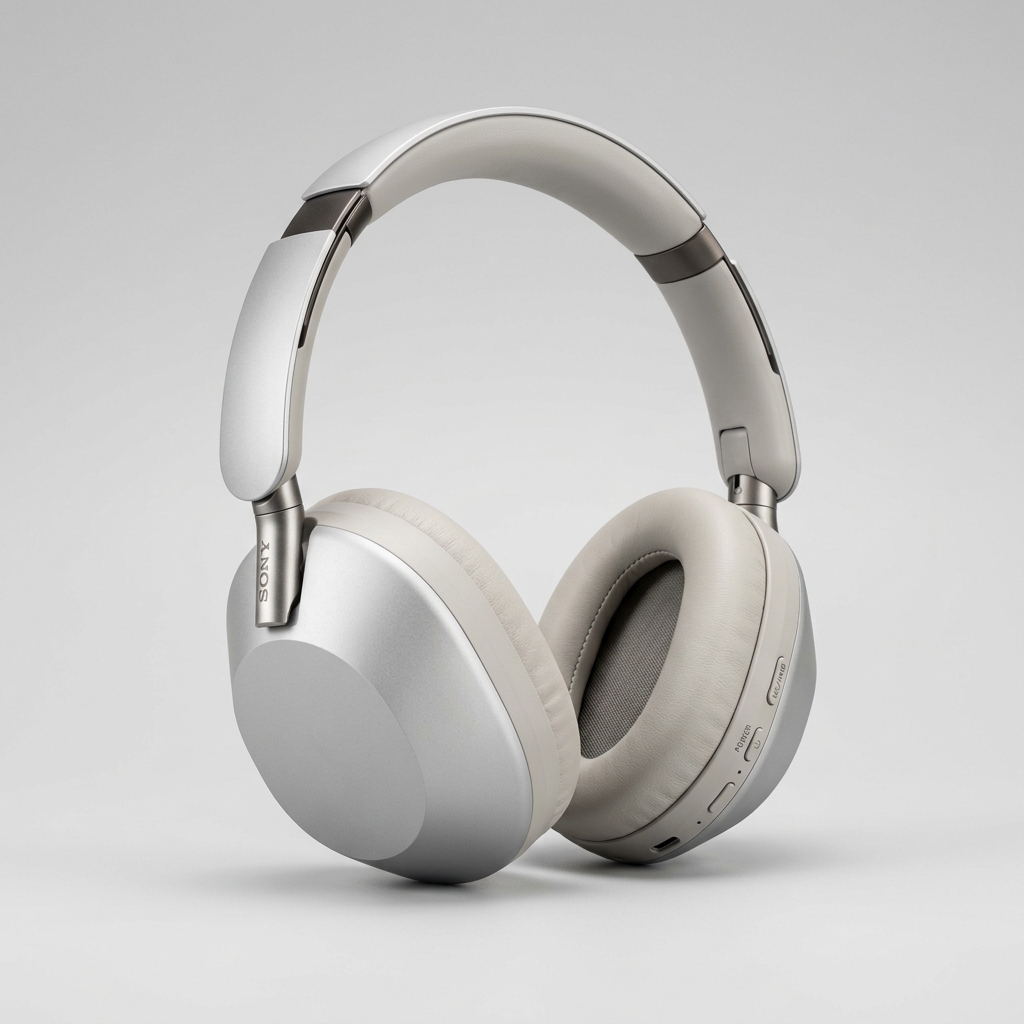 Sony WH-1000XM6$449.99 | 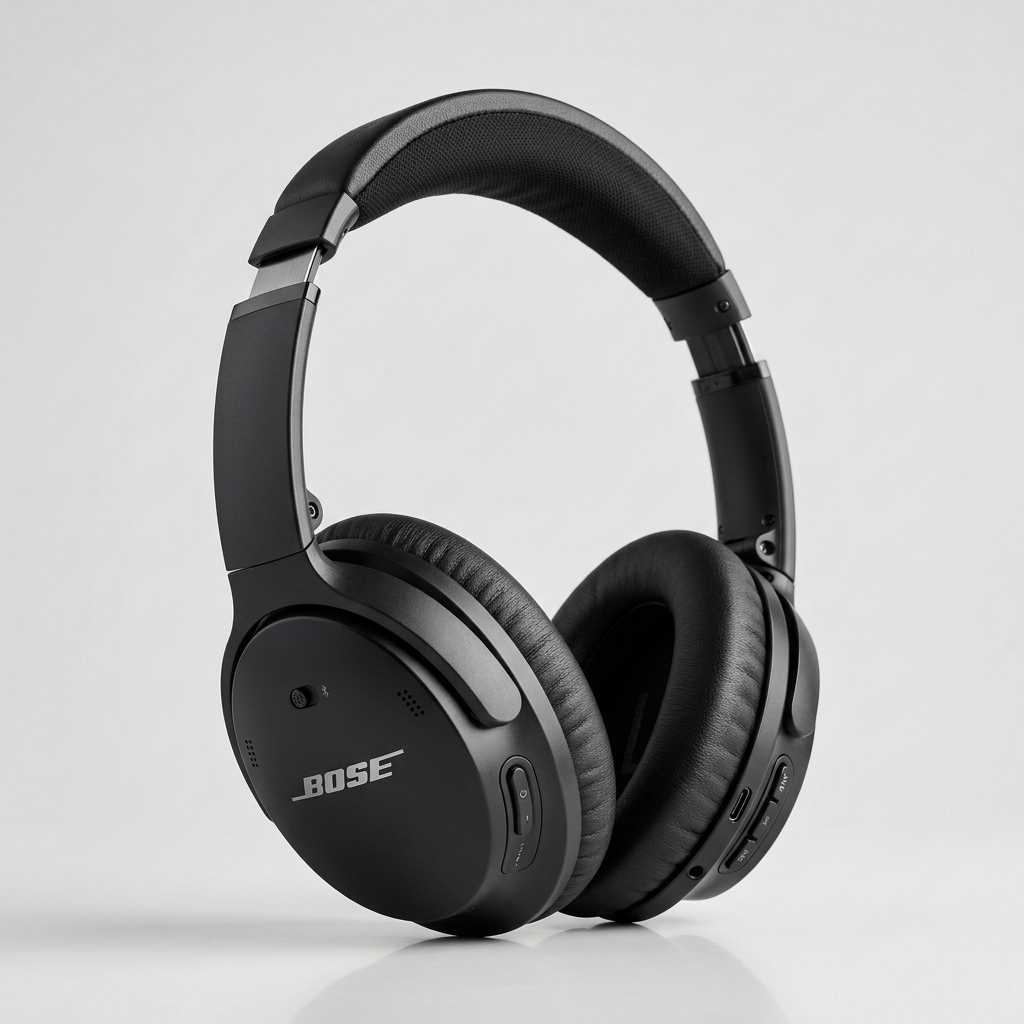 Bose QuietComfort Ultra Headphones$429 |
|---|---|---|
Noise cancellingWinner: Too close to call | ||
| Average loudness reduction (SoundGuys) | 87% | 85% |
| Low-frequency drone (aeroplane engines) | Slightly less | Slightly more blocked |
Battery | ||
| Measured playback (SoundGuys) | 37 hours 14 minutes | 27 hours 37 minutes |
ComfortWinner: Bose QuietComfort Ultra | ||
| Long-session wear | Good | Better — plush padding, spacious earcups |
FeaturesWinner: Sony WH-1000XM6 | ||
| EQ and customisation | Fully customisable EQ | More limited |
Price | ||
| US list price | $449.99 | $429 |
The Quick Verdict
Buy the Sony WH-1000XM6 unless you fly long-haul often or wear headphones for hours at a time, in which case buy the Bose QuietComfort Ultra.
The surprise is that noise cancelling — the thing these are bought for — barely separates them. What separates them is battery and comfort, and those point in opposite directions.
---
Noise Cancelling: Closer Than You Think
SoundGuys measured the Sony WH-1000XM6 reducing average loudness by 87% and the Bose QuietComfort Ultra achieving 85%.
Two percentage points. In their follow-up comparison against the second-generation QuietComfort Ultra, SoundGuys put it plainly: both are excellent noise cancellers with no clear advantage, and any area where one is better will not translate into a noticeable difference overall.
There is one exception worth knowing. Tom's Guide notes the Bose blocks slightly more low-frequency drone — the aeroplane-engine band. If most of your headphone hours happen at 35,000 feet, that is the one ANC difference that will register.
Otherwise: stop choosing between these on noise cancelling. It is a solved problem on both.
---
Battery: Not Close At All
This is where the two genuinely diverge, and by a lot.
SoundGuys measured:
- Sony WH-1000XM6: 37 hours 14 minutes
- Bose QuietComfort Ultra: 27 hours 37 minutes
Nearly ten hours. Both figures land close to their manufacturer's claims, which is worth noting in a category where they often do not.
Practically: the Sony is a charge-it-when-you-remember device. The Bose is a charge-it-weekly device. Neither will die on a flight.
---
Comfort
The most consistent finding in every review we read, and it goes to Bose.
Android Central describes the QuietComfort Ultras as ultra-comfortable, with ample plush padding and a spacious earcup design that is easy to wear for hours.
This matters more than spec sheets suggest. Headphones you take off after ninety minutes are worse noise cancellers than headphones you forget you are wearing, whatever the measurements say.
---
Features and Price
| Sony WH-1000XM6 | Bose QC Ultra | |
|---|---|---|
| Price | $449.99 | $429 |
| Measured battery | 37h14m | 27h37m |
| Loudness reduction | 87% | 85% |
| Custom EQ | Yes, fully | More limited |
| Comfort | Good | Better |
Tom's Guide calls the Sony the better all-round pick for most people, citing its customisable EQ and the deepest feature set of the two.
The $20 price gap should not decide this. At $429 versus $449.99 you are choosing a product, not saving money.
---
Which Should You Buy?
Sony WH-1000XM6 if you want the longest battery in the class, will actually use an EQ, and want the fuller feature set. This is the right answer for most people.
Bose QuietComfort Ultra if you fly long-haul often, or wear headphones for many hours at a stretch. Comfort and low-frequency isolation are real advantages and they compound over long sessions.
What should not decide it: the 87% versus 85% noise figure, or the $20.
If you would rather have earbuds — particularly if over-ear cups do not fit you well — see our best noise-cancelling earbuds for small ears guide. For home listening instead, our Sonos Arc Ultra review covers the soundbar side.
---
Sources
- [SoundGuys — Sony WH-1000XM6 vs Bose QuietComfort Ultra](https://www.soundguys.com/sony-wh-1000xm6-vs-bose-quietcomfort-ultra-headphones-137869/) — loudness reduction percentages, measured battery life, pricing.
- [SoundGuys — Bose QuietComfort Ultra (2nd Gen) vs Sony WH-1000XM6](https://www.soundguys.com/bose-quietcomfort-ultra-2nd-gen-vs-sony-wh-1000xm6-back-for-another-title-fight-145677/) — updated head-to-head.
- [RTINGS — WH-1000XM6 vs QuietComfort Ultra (2nd Gen) comparison](https://www.rtings.com/headphones/tools/compare/sony-wh-1000xm6-vs-bose-quietcomfort-ultra-headphones-2nd-gen/63313/112689) — full instrumented measurement suite.
- [Android Central — Should you buy the WH-1000XM6 over the QC Ultra?](https://www.androidcentral.com/accessories/headphones/should-you-buy-sony-wh-1000xm6-over-bose-qc-ultra-2nd-gen-headphones) — comfort assessment.
- [Tom's Guide — Sony WH-1000XM6 vs Bose QuietComfort Ultra](https://www.tomsguide.com/audio/sony-wh-1000xm6-vs-bose-quietcomfort-ultra) — overall recommendation and low-frequency finding.
- [TechTimes — Sony WH-1000XM6 vs Bose QuietComfort Ultra](https://www.techtimes.com/articles/314372/20260131/sony-wh-1000xm6-vs-bose-quietcomfort-ultra-headphones-which-better.htm) — additional comparative context.
*Published: 22 September 2026 · Last updated: 22 September 2026*
*TechSilico does not test headphones. Every measurement above was produced by the outlet credited beside it.*
Independent Testing Lab Benchmarks & Measurements
Benchmark measurements and evaluations cross-referenced from named independent testing laboratories:
The Sony WH-1000XM6 reduced average loudness by 87%, while the Bose QuietComfort Ultra achieved 85%.
The Sony WH-1000XM6 lasted 37 hours and 14 minutes; the Bose QuietComfort Ultra lasted 27 hours and 37 minutes.
Both headphones are excellent noise cancelers with no clear advantage, and while there may be areas where each set is better, this won't translate into a noticeable difference overall.
Side-by-side comparison of the Sony WH-1000XM6 and Bose QuietComfort Ultra Headphones (2nd Gen) across RTINGS' full measurement suite.
Bose wins the comfort round, with the QuietComfort Ultras being ultra-comfortable with ample, plush padding and a spacious earcup design that's easy to wear for hours.
For most people, the Sony WH-1000XM6 is the better all-around pick thanks to class-leading noise cancelling, a fully customizable EQ, and the deepest feature set.
Pros & Cons Consensus
Sony WH-1000XM6
- Reduced average loudness by 87% in SoundGuys testing, against 85% for the Bose
- 37 hours 14 minutes of measured battery life (SoundGuys) — nearly 10 hours more than the Bose
- Fully customisable EQ, which the Bose does not match
- The deepest feature set of the two by some margin
- Reviewers describe it as the better all-round pick for most people
- $449.99, $20 more than the Bose
- Loses the comfort comparison: reviewers consistently prefer the Bose over long sessions
- Blocks slightly less low-frequency drone — the aeroplane-engine case — than the Bose
- The 87% vs 85% noise-reduction gap is too small to hear
Bose QuietComfort Ultra Headphones
- Clearly the more comfortable of the two: ample plush padding and spacious earcups
- Blocks slightly more low-frequency drone, which is the aeroplane-cabin case
- $429, $20 less than the Sony
- Still 27+ hours of measured battery, which clears any realistic flight
- 27 hours 37 minutes measured battery (SoundGuys), nearly 10 hours behind the Sony
- Less customisable: no EQ to match Sony's
- Narrower feature set overall
- 85% average loudness reduction versus Sony's 87%
Sony WH-1000XM6
Sony for most people. Bose if you fly a lot or wear them all day.
The thing everyone expects to separate these — noise cancelling — does not. SoundGuys measured 87% average loudness reduction from the Sony and 85% from the Bose, and reviewers agree that difference is not something you hear. What does separate them is battery and comfort, pulling in opposite directions. The Sony measured 37 hours 14 minutes against the Bose's 27 hours 37 minutes, nearly ten hours more, and adds a fully customisable EQ. The Bose is the one you can wear for eight hours without thinking about it, and it blocks slightly more of the low-frequency drone that makes long flights unpleasant. For most people the Sony is the better buy. For frequent flyers and all-day wearers, the Bose earns its place — and the $20 price gap should not decide either way.
Choose Sony WH-1000XM6 If:
- You want the longest battery life available in this class
- You will actually use a custom EQ rather than leaving it on default
- You want the deepest feature set and do not mind paying $20 more
- You charge infrequently and want to stop thinking about it
Choose Bose QuietComfort Ultra Headphones If:
- You fly long-haul often — the low-frequency advantage is the aeroplane case
- You wear headphones for many hours at a stretch and comfort is the deciding factor
- You want to spend $429 rather than $449.99
- You do not care about EQ customisation
Frequently Asked Questions
Which has better noise cancelling, the Sony WH-1000XM6 or Bose QC Ultra?
Effectively neither. SoundGuys measured the Sony reducing average loudness by 87% and the Bose by 85%. That two-point gap is not audible. The one meaningful difference is that the Bose blocks slightly more low-frequency drone, which matters on aeroplanes and not much elsewhere.
How long does each actually last on a charge?
SoundGuys measured 37 hours 14 minutes for the Sony WH-1000XM6 and 27 hours 37 minutes for the Bose QuietComfort Ultra. That is a real ten-hour gap and the clearest difference between the two.
Which is more comfortable?
The Bose, consistently. Android Central describes ample plush padding and a spacious earcup design that is easy to wear for hours. If you wear headphones all day rather than for a commute, this is the strongest argument for the Bose.
Is the Sony worth the extra $20?
The $20 is not really the question — $449.99 against $429 is close to noise at this price. The question is whether ten extra hours of battery and a customisable EQ matter more to you than comfort over long sessions. For most people, yes.
Which is better for flying?
The Bose, narrowly. It blocks slightly more of the low-frequency engine drone that makes long flights tiring, and its comfort advantage compounds over a ten-hour journey. Its 27+ hours of measured battery clears any realistic flight.
Do these have better noise cancelling than earbuds?
Generally yes, because over-ear cups add physical isolation on top of active cancellation. If you want in-ear instead, particularly with smaller ears, see our guide to the best noise-cancelling earbuds for small ears.